Cacio e Pepe
Two ingredients, one technique, endless opportunity to get it wrong. This cacio e pepe recipe uses a Pecorino slurry made off the heat, the trick Roman trattorias rely on to guarantee a creamy sauce instead of a stringy clump.
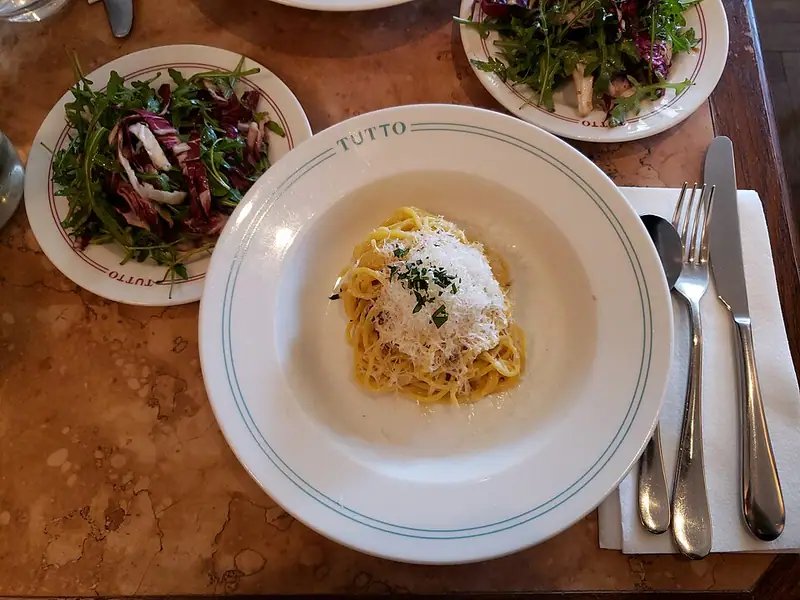
Photograph credit: Spaghetti, cacio e pepe & bitter leaf salad - Tutto 2024-04-04 by Andy Li · CC0 · Wikimedia Commons

Photograph credit: Spaghetti, cacio e pepe & bitter leaf salad - Tutto 2024-04-04 by Andy Li · CC0 1.0 · Wikimedia
Method
Tap a step to highlight it, or turn on Cook Mode for large type and step-by-step focus.
-
Cook the pasta in just 1.5 litres of lightly salted water — the smaller volume makes the water far starchier, which is your emulsifier.
-
While it cooks, toast the cracked pepper in a dry pan over medium heat for 45 seconds until it smells sharp and floral. Set aside.
-
Put the Pecorino in a bowl. Add 3 tablespoons of pasta water that has cooled for a minute and stir into a smooth, thick paste, adding more water a teaspoon at a time.
-
Drain the pasta 1 minute early, reserving 250 ml of water, and toss it in the pepper pan off the heat for 30 seconds to cool slightly.
-
Add the Pecorino paste and toss hard, loosening with pasta water until the sauce turns creamy and coats each strand.
-
Serve immediately with an extra grinding of pepper.
Chef’s Tips
- Cracked peppercorns, not pre-ground pepper. The volatile oils that make this dish sing evaporate within days of grinding.
- Let the pasta water cool for 60 seconds before mixing the paste — boiling water will curdle the cheese on contact.
- Some Pecorino is fiercely salty. Taste before salting the pasta water.
Pairing Suggestions
- A cold Frascati Superiore is the Roman default
- Serve with puntarelle or a chicory salad in anchovy dressing
- Finish with a shot of espresso
Storage & Reheating
Does not keep — the emulsion breaks within hours. Make only what you will eat.
Common questions
How long does Cacio e Pepe take to make?
About 20 minutes in total — 5 minutes of preparation and 15 minutes of cooking. The recipe serves 2.
What are the key tips for making Cacio e Pepe?
Cracked peppercorns, not pre-ground pepper. The volatile oils that make this dish sing evaporate within days of grinding. Let the pasta water cool for 60 seconds before mixing the paste — boiling water will curdle the cheese on contact. Some Pecorino is fiercely salty. Taste before salting the pasta water.
What should I serve with Cacio e Pepe?
A cold Frascati Superiore is the Roman default; Serve with puntarelle or a chicory salad in anchovy dressing; Finish with a shot of espresso.
Is Cacio e Pepe suitable for a special diet?
This recipe is vegetarian and no added sugar. Those labels are checked against the ingredient list, so a dish is only marked when nothing in it contradicts the claim.
Why did my Cacio e Pepe turn oily or grainy instead of creamy?
The cheese seized rather than melted, almost always from too much heat or too little starchy pasta water. Take the pan off the heat before adding the cheese, add it gradually while tossing, and loosen with more of the reserved pasta water rather than trying to fix it with more cheese, which makes a seized sauce worse.
How many calories are in Cacio e Pepe?
About 552 kcal per serving, with 26 g protein, 66 g carbohydrate and 20 g fat. The figures are calculated from the ingredient list and are an estimate.
Nutritional Highlights
Per serving, calculated from the ingredient list. Treat these as an estimate — brands and cuts vary.
Reader Reviews
Cooked this? Leave a review
Written and tested by Turab
One person, one kitchen — no test kitchen, no team. How every recipe on this site is checked before it goes up.
Related Recipes
More Italian cooking and quick meals ideas from Weekly Delight.
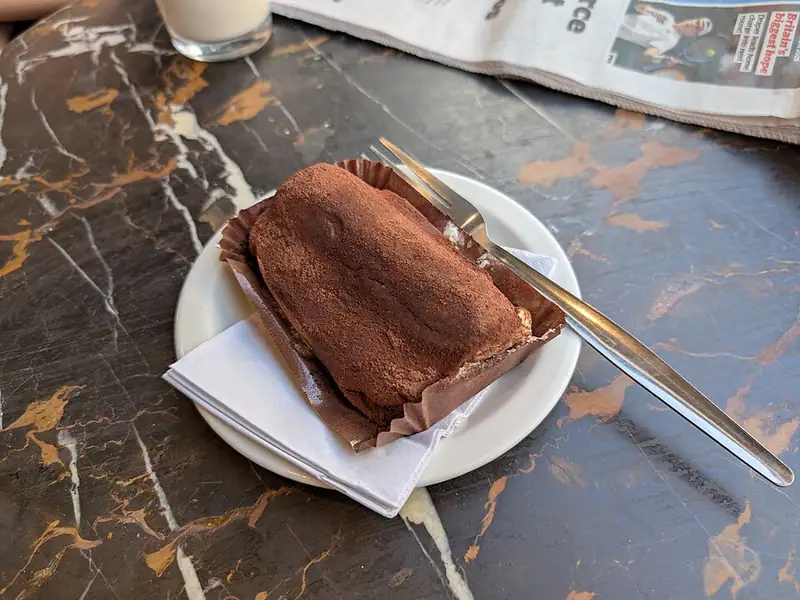
Classic Tiramisu
The Venetian classic, built on a properly cooked zabaglione so it sets firm without gelatine and carries no raw-egg…
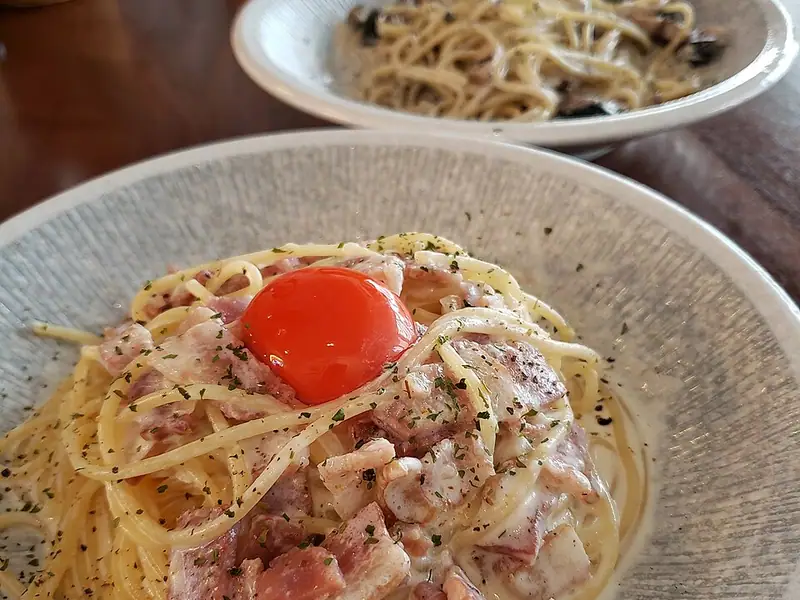
Spaghetti Carbonara
Real Roman carbonara has no cream in it — just eggs, Pecorino, guanciale and black pepper emulsified into a glossy…

Margherita Pizza
The Neapolitan original: a blistered, cloud-edged crust under nothing more than San Marzano tomatoes, milky fior di…
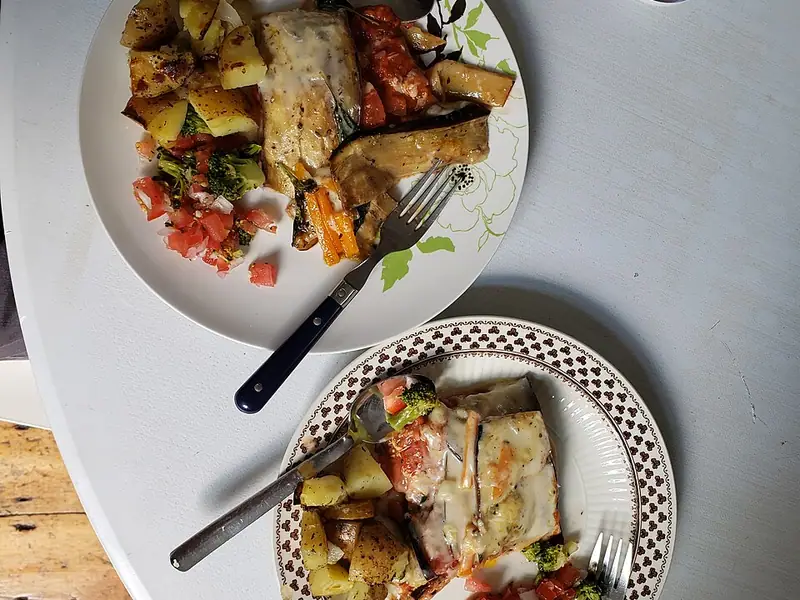

Lasagna Bolognese
A proper lasagne alla Bolognese is a study in patience: a three-hour ragù, a nutmeg-scented besciamella and…