Classic Chocolate Layer Cake
The birthday cake standard: three dark, tender layers made with cocoa bloomed in boiling coffee, under a silky chocolate buttercream. The batter is thin enough to alarm you, which is exactly what gives the crumb its moisture.
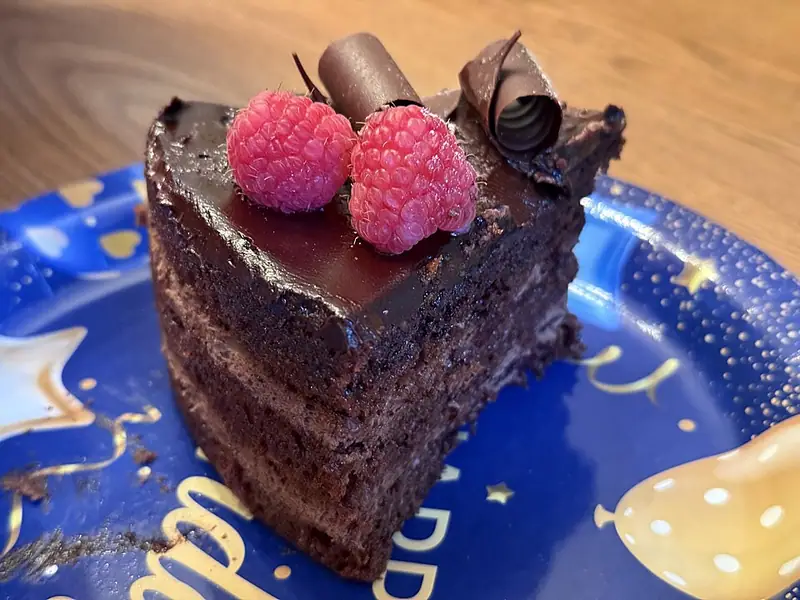
Photograph credit: 2025-01-26 16 53 04 A slice of chocolate raspberry 3-layer cake in the Mountainview… by Famartin · CC BY-SA 4.0 · Wikimedia Commons · this resized copy is shared under the same licence
How to Cook Classic Chocolate Layer Cake
Tap a step to highlight it, or turn on Cook Mode for large type and step-by-step focus.
-
Heat the oven to 175°C / 350°F. Butter three 20 cm tins, line the bases and dust with cocoa rather than flour.
-
Whisk the cocoa into the boiling coffee until smooth and leave to cool to warm. It will look like thin mud and smell like the finished cake.
-
Whisk the flour, both sugars, bicarbonate of soda, baking powder and salt in a large bowl.
-
Whisk the buttermilk, oil, eggs and vanilla together, then whisk in the cooled cocoa mixture.
-
Pour the wet into the dry and whisk just until smooth. The batter will be very thin — pourable, closer to a crêpe batter than a cake batter. That is correct.
-
Divide between the tins, about 480 g each, and bake 30 to 34 minutes until a skewer comes out with a crumb or two clinging.
-
Cool in the tins 15 minutes, then turn out onto racks and cool completely, at least 1 hour. Warm layers will melt buttercream.
-
For the buttercream, beat the butter alone for 5 minutes until visibly paler. This is the difference between silky and grainy.
-
Add the icing sugar and cocoa in three additions, beating well, then the melted chocolate, cream and salt. Beat 3 minutes more.
-
Level the layers with a serrated knife, stack with a generous 150 g of buttercream between each, then coat the outside thinly, chill 20 minutes, and finish with the rest.
Related guide: Prep, cook and total time.
Something wrong or unclear in this recipe? Report a problem with this recipe.
Keep an Eye on These
- Weigh the batter into the tins. Layers of different thickness are the single most obvious sign of a home-made cake.
- Room-temperature eggs and buttermilk, genuinely. Cold dairy seizes the oil into specks that never disperse.
- If the buttercream splits, it is too cold: warm the outside of the bowl briefly and beat again.
Common Substitutions & Variations
- Out of buttermilk? The usual stand-in is a tablespoon of lemon juice or vinegar stirred into 250 ml of ordinary milk and left five minutes; it is thinner than cultured buttermilk, so a batter may need a little less of it.
A Little Background
Cocoa powder is mostly starch and locked-up flavour compounds, and pouring boiling liquid over it — blooming — dissolves those compounds so the cake tastes of chocolate rather than of dust. Coffee does not make it taste of coffee; it deepens the bitter notes that read as darkness. Oil rather than butter keeps the crumb soft straight from the fridge, because oil stays liquid at cold temperatures where butter sets firm, and buttermilk supplies the acid the bicarbonate of soda needs to lift a batter this wet.
To Go With It
Cold milk · Black coffee · Raspberries, to cut the richness
Storing Leftovers
Under a dome at room temperature for 3 days; refrigerated for a week, but bring slices to room temperature before serving. Un-iced layers freeze, well wrapped, for 3 months.
Questions People Ask
How long does Classic Chocolate Layer Cake take to make?
35 minutes of preparation and 32 minutes of cooking, plus 1 hour 35 minutes of cooling, so allow 2 hours 42 minutes from start to finish. The method also needs time for cooling, which it does not time, so treat that as a minimum. The recipe serves 12.
The Numbers per Serving
Per serving, calculated from the ingredient list with USDA FoodData Central figures (SR Legacy). A calculation, not a laboratory analysis: brands, cuts and how you measure change the real numbers. How the figures are worked out.
Your notes on this recipe
Cooked this? Keep a note for next time
Compiled by Turab
Checked by script for timings, diet labels and nutrition arithmetic. How the recipes are checked. Found a mistake? Tell us.
First published ; last changed .
You Might Also Like
More American cooking and desserts ideas from Weekly Delight.
Molten Chocolate Lava Cake
Individual chocolate cakes with a liquid centre, from oven to table in twenty minutes. The whole trick is pulling…

Chocolate Cream Pie
A baked pastry case filled with dark chocolate custard and topped with whipped cream.

Mint Chocolate Chip Ice Cream
A fresh mint custard ice cream churned with chopped dark chocolate, chilled for 4 hours, then frozen until firm.

Chocolate Mug Cake
A single-serving chocolate cake made in a mug from almond flour, cocoa and an egg, cooked in the microwave in about…

Chocolate Cheesecake
A rich baked chocolate cheesecake on a chocolate biscuit base, made with melted dark chocolate and cocoa.


Chocolate Pudding
A smooth stovetop chocolate pudding made with cocoa, cornflour and milk, chilled until set. Four servings in 15…