Amêijoas à Bulhão Pato
Clams steamed open with garlic, olive oil, white wine, lemon and fresh coriander, a Lisbon classic ready in 20 minutes.

Photograph credit: Amêijoas à Bulhão Pato (image of Amêijoas à Bulhão Pato on Wikidata Q9611817) by ricardo · CC BY-SA 2.0 · Wikimedia Commons · this resized copy is shared under the same licence
Before You Start
Purge the clams to remove sand.
Cover the pan so they open together.
Taste before adding salt.
How to Make Amêijoas à Bulhão Pato
Tap a step to highlight it, or turn on Cook Mode for large type and step-by-step focus.
-
Purge the clams in cold salted water for 30 minutes. Rinse and scrub.
-
Warm the oil and garlic in a wide pan over low heat for 3 minutes until fragrant.
-
Add the clams and wine, cover and cook over high heat for 4 minutes, shaking the pan, until the shells open. Discard any that stay shut.
-
Add the coriander and lemon juice, toss and serve with the bread.
What's Going On Here
How do you tell a clam is alive? Tap it: if the shell is open, it should close. If it stays open, throw it away. Amêijoas à Bulhão Pato are Lisbon's best known clam dish, and the whole recipe is clams, garlic, oil, wine and herbs, steamed for a few minutes until the shells open.
Purge the clams for 30 minutes in cold salted water to remove sand, then scrub and rinse them. Warm olive oil with plenty of sliced garlic over low heat until fragrant but not coloured. Add the clams and wine at once and cover the pan, shaking it, since steaming them together makes them all open at the same time. The clams are done in 3 to 5 minutes.
Discard any that stay shut. Add a big handful of chopped coriander and a squeeze of lemon, toss and pour into a wide bowl with all the juices. Serve with crusty bread for dipping, which is half the dish. The liquid is salty, so taste before adding salt. The dish is named for a poet, Bulhão Pato, who is said to have loved it.
Leftovers, Reheating and Keeping
Best fresh.
Changing the Recipe
- An eighth of a teaspoon of garlic powder per clove is the stand-in usually given when you are out of fresh garlic; it will not brown the same way, and it burns easily, so add it with the liquid.
- A dry vermouth keeps for longer than an open bottle of white wine and is the closer swap than a random white left in the fridge; for an alcohol-free version, use the same amount of stock with a squeeze of lemon.
Good With
- Crusty bread
- Vinho verde
- Lemon wedges
Nutrition per Serving
Per serving, an approximate calculation from the ingredient list. Treat it as a rough guide: all the alcohol is counted, though some is lost in cooking; part of the energy comes from foods, or weights per item, with no recorded source. The calories include 4 g of alcohol a serving, which is not part of the protein, carbohydrate or fat. How the figures are worked out.
Your notes on this recipe
Cooked this? Keep a note for next time
Compiled by Turab
Checked by script for timings, diet labels and nutrition arithmetic. How the recipes are checked.
First published ; last changed .
You Might Also Like
More Portuguese cooking and dinner ideas from Weekly Delight.
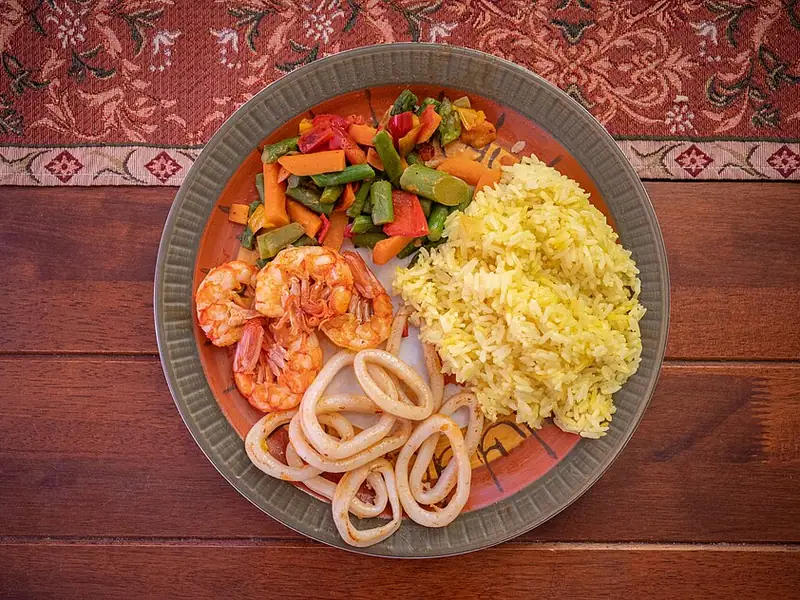
Arroz de Marisco
Portuguese seafood rice, wetter than a paella and served in the pot, built on a tomato and coriander refogado with…

Cataplana de Marisco
A Portuguese seafood stew of clams, prawns and white fish cooked with tomatoes, peppers, chorizo and white wine in a…

Peri Peri Chicken Thighs
Chicken thighs marinated in a garlicky, lemony peri peri sauce with chillies and paprika, then roasted until the…
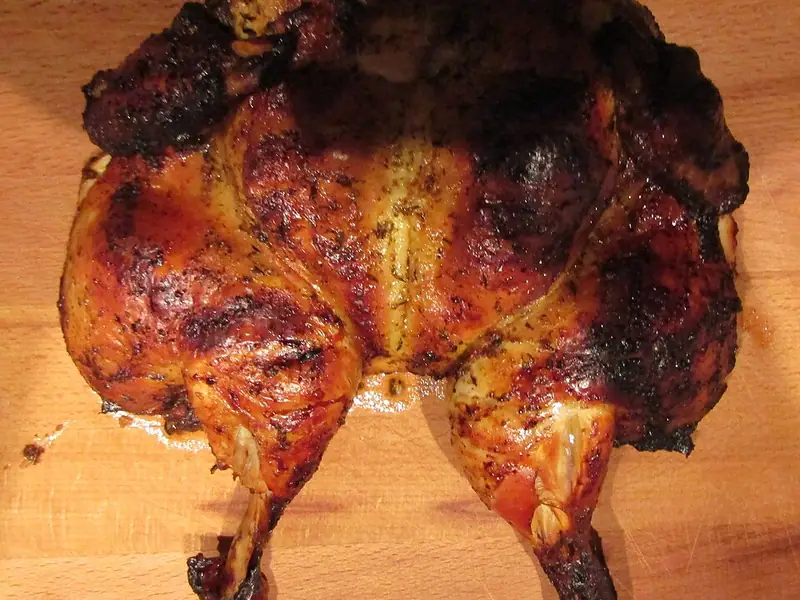
Piri Piri Chicken
Spatchcocked chicken marinated in a fiery bird's eye chilli, garlic and vinegar sauce, grilled hard and basted…

Polvo a Lagareiro
Octopus simmered then roasted in olive oil with garlic and potatoes that are punched flat, a Portuguese oven classic.
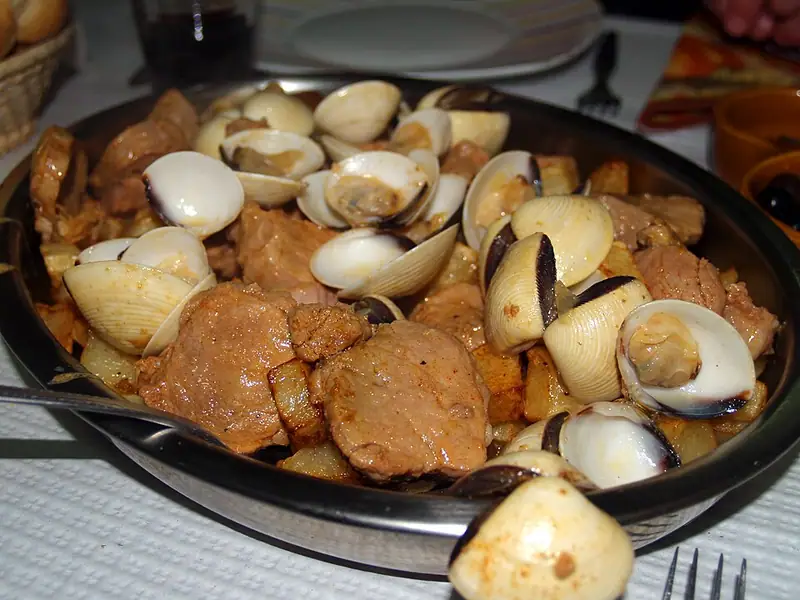

Carne de Porco a Alentejana
Cubes of pork marinated in wine and paprika paste, fried and finished with clams, fried potatoes and coriander.