Bucatini all'Amatriciana
The Roman classic from Amatrice: guanciale rendered until crisp, tomatoes cooked down in the rendered fat, and Pecorino stirred through at the end. Bucatini catches the sauce inside the hollow strand.
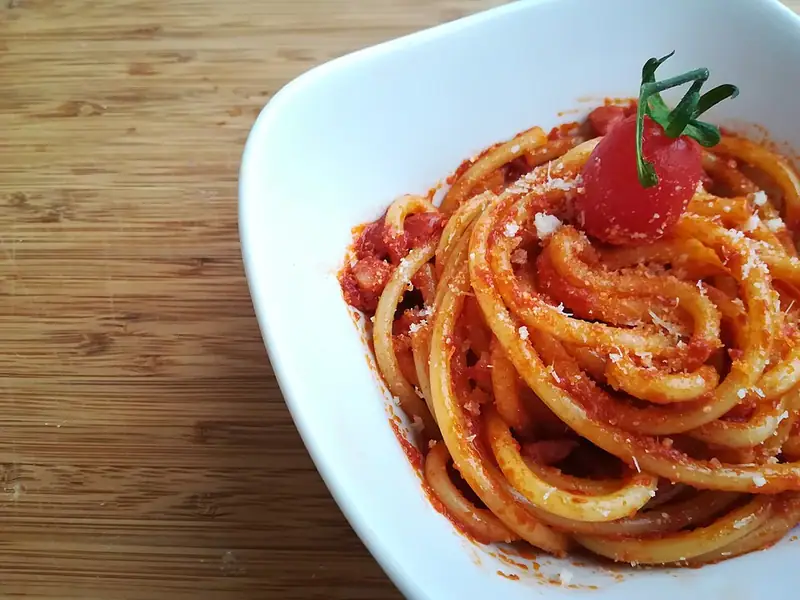
Photograph credit: Bucatini allamatriciana by Popo le Chien · CC0 · Wikimedia Commons
Before You Start
Guanciale is worth seeking out. Pancetta makes a good dish but not an amatriciana.
Onion and garlic are both traditionally absent. Amatrice takes this seriously.
Bucatini spits sauce — the hollow strand is a hazard. A napkin is not optional.
Cooking Bucatini all'Amatriciana
Tap a step to highlight it, or turn on Cook Mode for large type and step-by-step focus.
-
Put the guanciale in a cold, wide pan and set over medium-low heat. Render slowly for 8 to 10 minutes until the pieces are crisp and a generous pool of fat has collected.
-
Lift out half the guanciale with a slotted spoon and reserve it for the top, so some stays crisp.
-
Add the crumbled peperoncino to the fat and swirl for 20 seconds, then pour in the wine and let it bubble away.
-
Add the crushed tomatoes and salt. Simmer at a lively bubble for 12 to 15 minutes, until the sauce darkens and the fat separates at the edges.
-
Cook the bucatini in well-salted water until 2 minutes short of al dente, reserving 250 ml of water.
-
Tip the drained pasta into the sauce with a splash of water and toss over the heat for 2 minutes so it finishes cooking in the sauce.
-
Off the heat, stir through most of the Pecorino and toss until glossy, loosening with more pasta water as needed.
-
Serve topped with the reserved crisp guanciale, the remaining Pecorino and plenty of black pepper.
Something wrong or unclear in this recipe? Report a problem with this recipe.
What's Going On Here
Guanciale is cured jowl, far fattier and more aromatic than pancetta, and rendering it slowly from a cold pan produces a pool of seasoned fat that becomes the base of the sauce. Cooking the tomatoes in that fat rather than in olive oil is what gives amatriciana its particular depth.
Storage and Reheating
Refrigerate 2 days. Reheat in a pan with a splash of water; the microwave makes the guanciale chewy.
Swaps and Variations
- A dry vermouth keeps for longer than an open bottle of white wine and is the closer swap than a random white left in the fridge; for an alcohol-free version, use the same amount of stock with a squeeze of lemon.
Good With
- A Cesanese or a young Montepulciano
- Serve with nothing but bread
- Finish with fresh figs
Sides from the same cuisine on this site: Rosemary Focaccia, Creamy Parmesan Polenta, Ciabatta.
Bucatini all'Amatriciana Nutrition Facts
No nutrition figures are given for this recipe: they cannot be worked out reliably from its ingredient list (some ingredient lines cannot be read). Why some recipes have none.
Your notes on this recipe
Cooked this? Keep a note for next time
Compiled by Turab
Checked by script for timings, diet labels and nutrition arithmetic. How the recipes are checked. Found a mistake? Tell us.
First published ; last changed .
You Might Also Like
More Italian cooking and dinner ideas from Weekly Delight.

Pasta all'Amatriciana
Bucatini in a tomato sauce with crisp pancetta, onion, chilli and pecorino.

Rigatoni all'Amatriciana
Rigatoni in a sauce of crisp guanciale, tomato, chilli and pecorino, ready in 35 minutes.

Chicken Carbonara
Spaghetti with chicken, bacon, egg yolks and parmesan in a glossy sauce that sets from the heat of the pasta, ready…
Instant Pot Minestrone
A chunky Italian vegetable soup of beans, small pasta and tomato, cooked under pressure in 15 minutes and finished…

Pasta alla Norcina
Pasta in a sauce of crumbled pork sausage, cream and pecorino, named for Norcia and ready in 30 minutes.


Pasta e Patate
Small pasta cooked with diced potatoes, onion, tomato and a rind of parmesan into a creamy, thick Neapolitan-style…