Hakka Noodles
Egg noodles tossed with shredded vegetables over a high flame. The Indian Chinese restaurant staple, and fifteen minutes start to finish.
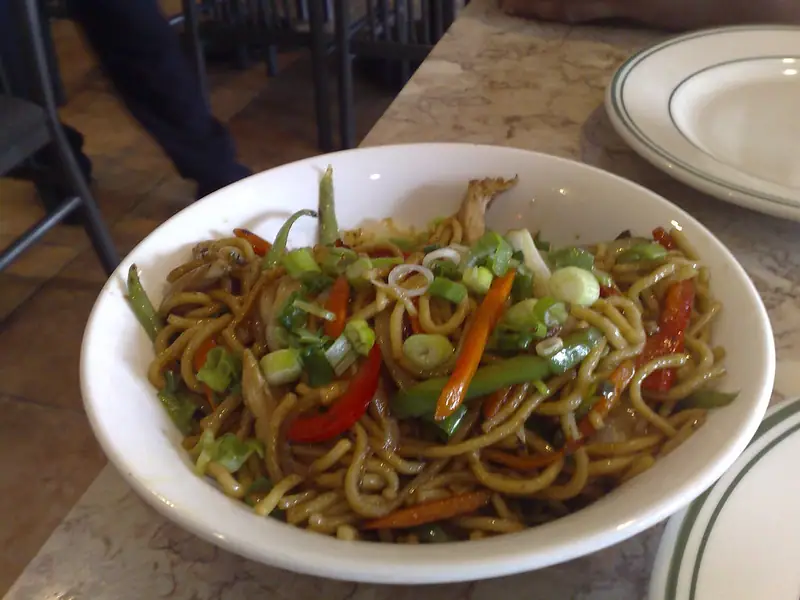
Photograph credit: Chicken Hakka Noodles from Wah Taj ! Herndon VA by ShashiBellamkonda · CC BY 2.0 · Flickr
Making Hakka Noodles Ahead
Keeps 2 days refrigerated. Reheat in a hot pan, not a microwave.

Photograph credit: indian oasis hakka noodles by goodiesfirst · CC BY 2.0 · Flickr
Making Hakka Noodles
Tap a step to highlight it, or turn on Cook Mode for large type and step-by-step focus.
-
Boil the noodles for 1 minute less than the packet says.
-
Drain, rinse under cold water until completely cool, and toss with 1 tsp of the oil.
-
Heat the remaining oil in a wok until it shimmers.
-
Fry the garlic and ginger for 20 seconds.
-
Add the onion, cabbage, carrot and pepper and stir-fry over the highest heat for 3 minutes. They should still be crunchy.
-
Add the soy, vinegar, white pepper, sugar and salt and toss for 30 seconds.
-
Tip in the noodles and lift and toss with two spoons for 2 minutes, until heated through and streaked brown.
-
Add the spring onions, toss once more, and serve.
Something wrong or unclear in this recipe? Report a problem with this recipe.
A Few Pointers
- Cold, oiled noodles or they clump.
- Shred the vegetables noodle-thin.
- The highest heat your hob has, and keep everything moving.
Behind the Recipe
Cook the noodles a minute short, rinse them cold and toss them in a teaspoon of oil. Noodles that go into the wok hot and wet steam rather than fry, and they clump into a single mass. Cold, oiled and slightly under, they separate and take the heat. Shred everything the same thickness as the noodles so a forkful is one texture.
Serving Ideas
Gobi manchurian · Chilli paneer · Hot and sour soup
Sides from the same cuisine on this site: Aloo Methi, Beans Poriyal, Bengali Aloo Posto.
If You're Missing Something
- Out of spring onions? A small regular onion, finely sliced, or a few chives stirred in at the end both cover the job.
- If you only have ground ginger, a quarter-teaspoon for each tablespoon of fresh is the ratio usually given; it tastes warmer and less bright than the fresh root.
- An eighth of a teaspoon of garlic powder per clove is the stand-in usually given when you are out of fresh garlic; it will not brown the same way, and it burns easily, so add it with the liquid.
What's in a Serving
Per serving, calculated from the ingredient list with USDA FoodData Central figures (SR Legacy). A calculation, not a laboratory analysis: brands, cuts and how you measure change the real numbers. How the figures are worked out.
Your notes on this recipe
Cooked this? Keep a note for next time
Compiled by Turab
Checked by script for timings, diet labels and nutrition arithmetic. How the recipes are checked. Found a mistake? Tell us.
First published ; last changed .
You Might Also Like
More Indian cooking and dinner ideas from Weekly Delight.
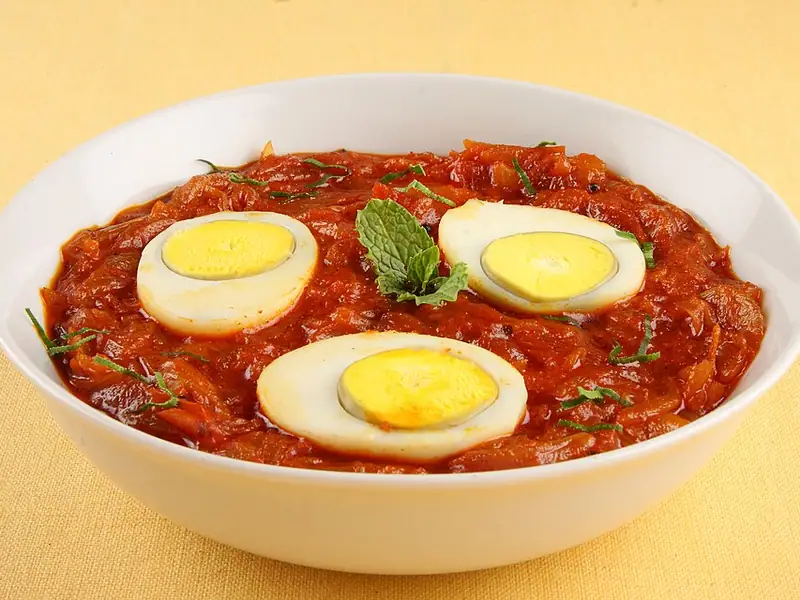
Kerala Egg Roast
Boiled eggs coated in a thick, dark onion and tomato masala with fennel, chilli and curry leaves.

Kerala Prawn Roast
Prawns cooked with sliced shallots, curry leaves, black pepper and coconut oil until the masala clings in a dark…
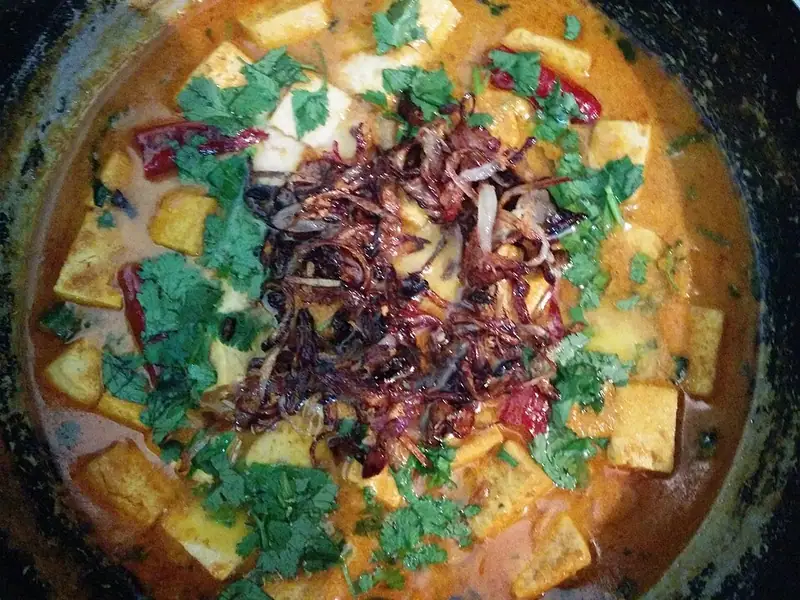
Paneer Do Pyaza
Cubes of paneer cooked with onion two ways, in a tomato masala, with peppers and a finish of garam masala.

Paneer Jalfrezi
Strips of paneer tossed over a high heat with peppers, onion and tomato in a thick, spiced masala that clings rather…

Prawn Balchao
Prawns in a dark, tangy Goan masala of dried chillies, vinegar, ginger and garlic, cooked until thick and slightly…

Prawn Bhuna
King prawns cooked in a thick, dry-edged bhuna masala of browned onion, tomato and ground spices, finished with…