Misal Pav
Sprouted moth beans in a thin, fiery gravy, topped with farsan, raw onion and coriander, with a slick of red rassa oil floating on top and soft pav to mop it up.
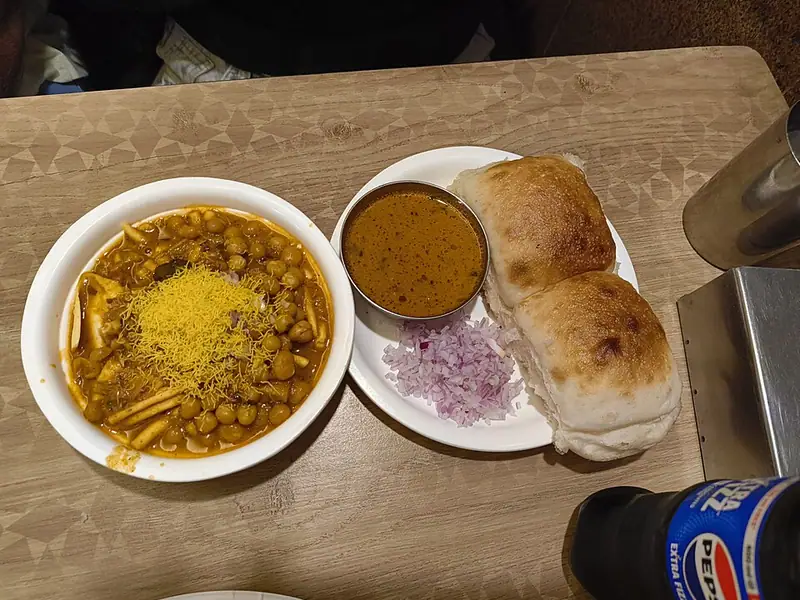
Photograph credit: Misal Pav Vishwanand 2026-01-28 by Sakurakat · CC0 · Wikimedia Commons
Method
Tap a step to highlight it, or turn on Cook Mode for large type and step-by-step focus.
-
Sprout the moth beans first: soak them 8 hours, drain, then tie them in a damp cloth and leave 12 to 16 hours until small tails appear.
-
For the usal, heat the oil and crackle the mustard and cumin seeds, then add the curry leaves and asafoetida.
-
Add the chopped onion and cook 8 minutes until soft, then the turmeric.
-
Add the sprouts, salt and 200 ml water. Cover and simmer 20 minutes until tender but not collapsing. Set aside.
-
For the rassa, dry roast the coconut in a pan until deep golden and nutty, about 4 minutes, then blend it with the garlic, ginger and half the sliced onion to a paste.
-
Fry the remaining onion in the oil for 12 minutes until dark, then add the paste and cook 8 minutes until the oil separates and rises.
-
Add the kanda lasun masala and ground coriander and fry 2 minutes, standing back — it is pungent.
-
Pour in the hot water and salt and simmer 15 minutes. The rassa should stay thin, and a layer of red oil should float on top. Do not skim it off.
-
To serve, spoon usal into each bowl, ladle hot rassa over it, and top generously with farsan, raw onion and coriander.
-
Add a lime wedge and serve at once with griddled pav, before the farsan softens.
Chef’s Tips
- Assemble at the table. Farsan added early turns to paste within two minutes.
- The red oil on the rassa is the point, not a fault. Leave it.
- Sprout the beans yourself — tinned or unsprouted moth beans give a flat, heavy misal.
Common Substitutions & Variations
- A pinch of dried chilli flakes works in place of fresh chilli — start with about a third of the quantity the chilli in the list implies, since dried chilli is more concentrated, and add more to taste.
- Lemon is the everyday swap for limes in this kind of dish — the acidity plays the same role even though the flavour is not identical.
- A quarter-teaspoon of ground ginger per tablespoon of fresh is the standard ratio if you are working from the spice rack rather than a fresh root.
Pairing Suggestions
- Griddled pav rolls
- Buttermilk or a cold lassi
- Extra farsan on the table
Storage & Reheating
Usal and rassa keep 3 days refrigerated, separately, and freeze 2 months. Add farsan only at serving.
Common questions
How long does Misal Pav take to make?
About 1 hour 15 minutes of hands-on work — 30 minutes of preparation and 45 minutes of cooking — plus 12 hours of fermenting, so allow 13 hours 15 minutes from start to finish. The recipe serves 6.
What are the key tips for making Misal Pav?
Assemble at the table. Farsan added early turns to paste within two minutes. The red oil on the rassa is the point, not a fault. Leave it. Sprout the beans yourself — tinned or unsprouted moth beans give a flat, heavy misal.
What should I serve with Misal Pav?
Griddled pav rolls; Buttermilk or a cold lassi; Extra farsan on the table.
Can Misal Pav be made ahead or frozen?
Usal and rassa keep 3 days refrigerated, separately, and freeze 2 months. Add farsan only at serving.
Is Misal Pav suitable for a special diet?
This recipe is vegetarian, vegan and no added sugar. Those labels are checked against the ingredient list, so a dish is only marked when nothing in it contradicts the claim.
How many calories are in Misal Pav?
About 486 kcal per serving, with 22 g protein, 58 g carbohydrate and 18 g fat. The figures are calculated from the ingredient list and are an estimate.
Nutritional Highlights
Per serving, calculated from the ingredient list. Treat these as an estimate — brands and cuts vary.
Reader Reviews
Cooked this? Leave a review
Written and tested by Turab
One person, one kitchen — no test kitchen, no team. How every recipe on this site is checked before it goes up.
Related Recipes
More Indian cooking and appetizers ideas from Weekly Delight.
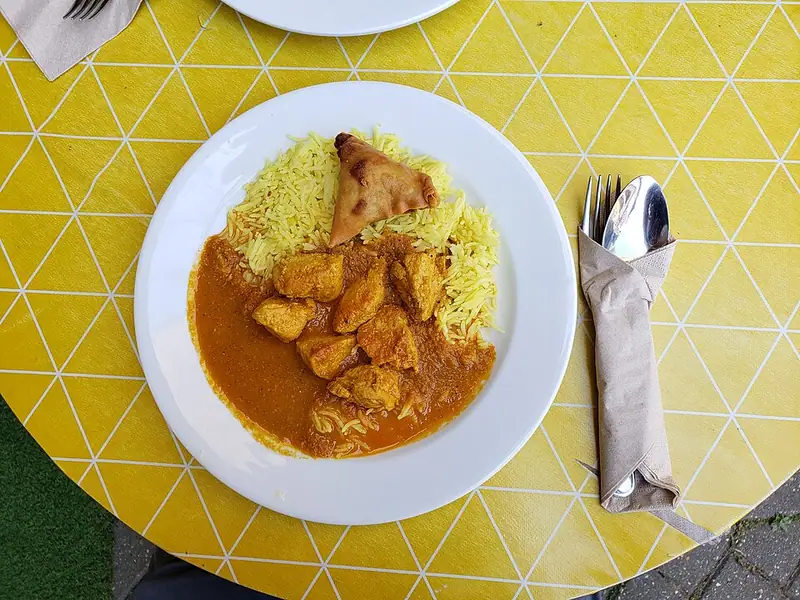
Chicken Tikka Masala
Charred yogurt-marinated chicken folded into a silky, gently spiced tomato-cream sauce — the most ordered curry in…
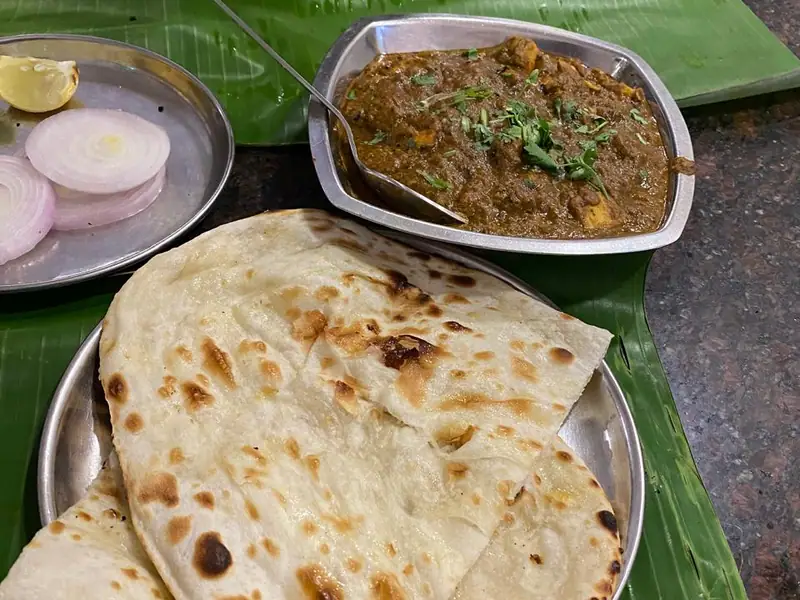
Butter Chicken (Murgh Makhani)
Delhi's murgh makhani: tandoori chicken finished in a sauce of tomatoes, butter and cream, balanced with a whisper…
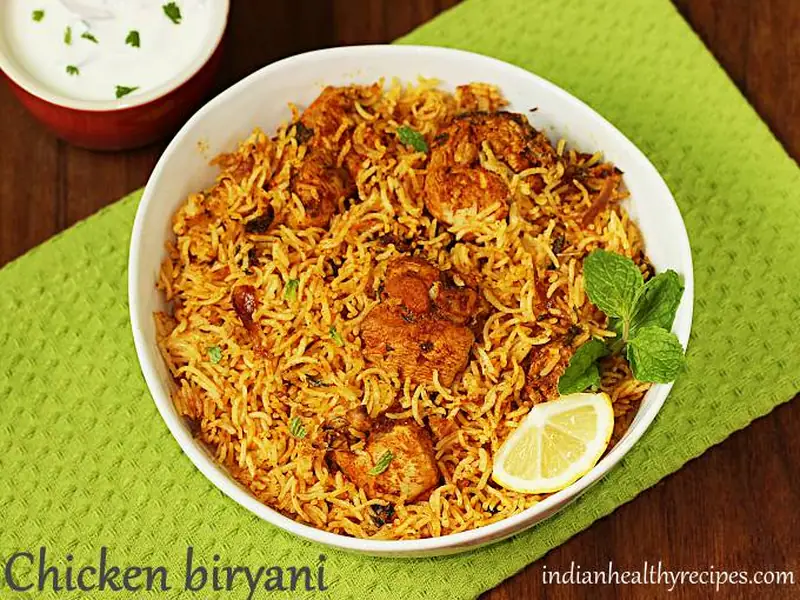
Hyderabadi Chicken Biryani
Hyderabadi dum biryani, where marinated chicken and part-cooked rice are layered raw and sealed to steam in their…
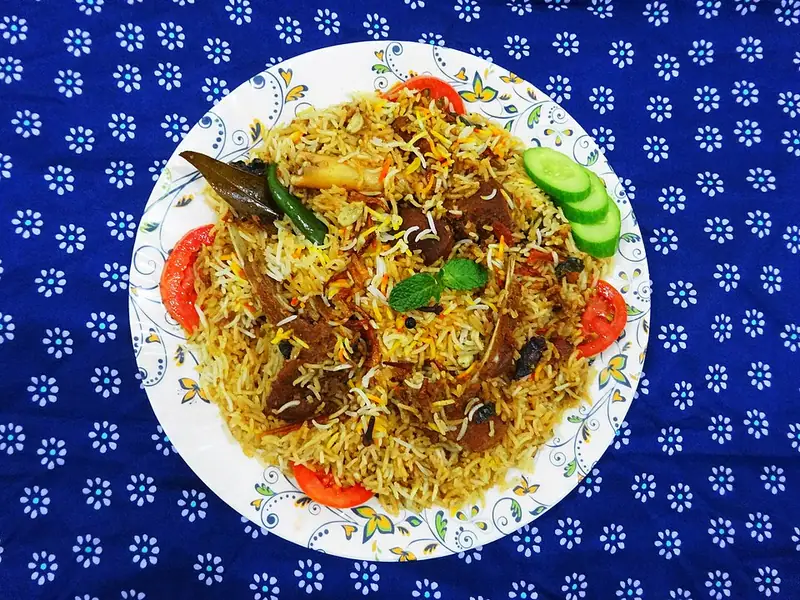

Hyderabadi Biryani
Marinated raw lamb layered under half-cooked rice and sealed with dough, so the meat and rice cook together in…