Pastéis de Nata
Lisbon's custard tarts: laminated pastry shells filled with a loose cinnamon custard and blasted in a furnace-hot oven until the tops blister black. The scorch marks are the point.
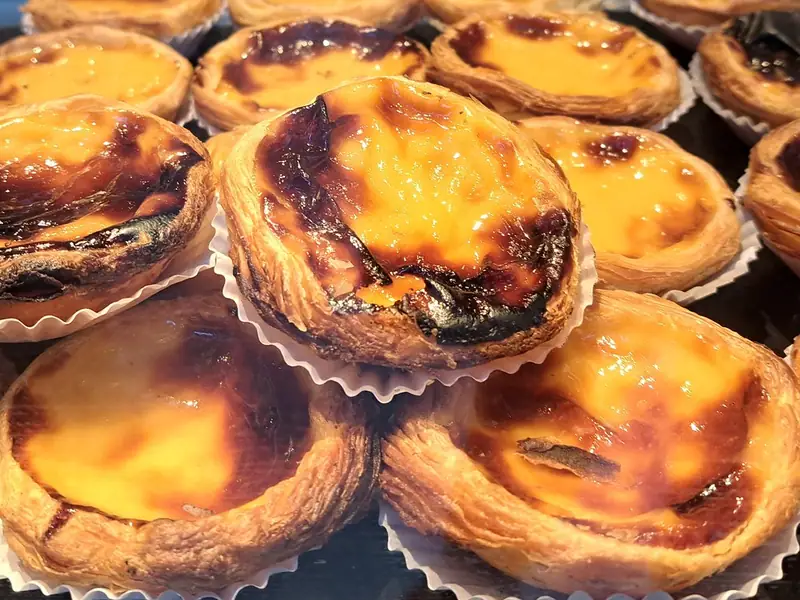
Photograph credit: Pastel de nata closeu up Porto Portugal by amanderson2 · Public Domain Mark 1.0 · Flickr

Photograph credit: Pastel de Nata Porto Portugal by amanderson2 · Public Domain Mark 1.0 · Flickr
Method
Tap a step to highlight it, or turn on Cook Mode for large type and step-by-step focus.
-
Boil the sugar, water, cinnamon stick and lemon peel to 105°C / 221°F, about 4 minutes. Set aside without stirring.
-
Whisk the flour with 100 ml of the milk to a smooth paste, then whisk in the remaining milk.
-
Cook over medium heat, whisking constantly, until it thickens like a custard, about 5 minutes.
-
Remove the cinnamon and peel from the syrup and pour it into the hot milk mixture in a steady stream, whisking hard.
-
Cool for 10 minutes, then whisk in the yolks, vanilla and salt. Strain through a fine sieve and cool completely.
-
Roll the pastry into a tight log, then cut into 12 discs about 2 cm thick.
-
Set each disc cut-side down in a muffin tin hole. Dip your thumb in cold water and press from the centre outward and up the sides until the pastry lines the hole with a rim just above the top.
-
Heat the oven to its absolute maximum, 260°C / 500°F if it goes there, with a heavy tray on the top shelf.
-
Fill each case three-quarters full with cold custard and bake on the hot tray for 12 to 15 minutes until the pastry is crisp and the tops are blistered with black patches.
-
Cool 10 minutes in the tin, then dust with cinnamon and icing sugar and eat warm.
Chef’s Tips
- Maximum heat, top shelf. Without real heat you will never get the scorched tops.
- Cold custard into room-temperature pastry cases. This buys the pastry time to laminate.
- They are best within an hour of baking, which is why Lisbon bakeries sell them all day long.
Pairing Suggestions
- A bica, the Portuguese espresso
- A glass of tawny port
- Nothing else — they are perfect alone
Storage & Reheating
Best on the day. Keeps 2 days and re-crisps at 200°C / 390°F for 4 minutes. Do not refrigerate.
Common questions
How long does Pastéis de Nata take to make?
About 55 minutes in total — 30 minutes of preparation and 25 minutes of cooking. The recipe serves 12.
What are the key tips for making Pastéis de Nata?
Maximum heat, top shelf. Without real heat you will never get the scorched tops. Cold custard into room-temperature pastry cases. This buys the pastry time to laminate. They are best within an hour of baking, which is why Lisbon bakeries sell them all day long.
What should I serve with Pastéis de Nata?
A bica, the Portuguese espresso; A glass of tawny port; Nothing else — they are perfect alone.
How should Pastéis de Nata be stored?
Best on the day. Keeps 2 days and re-crisps at 200°C / 390°F for 4 minutes. Do not refrigerate.
Is Pastéis de Nata suitable for a special diet?
This recipe is vegetarian. Those labels are checked against the ingredient list, so a dish is only marked when nothing in it contradicts the claim.
How many calories are in Pastéis de Nata?
About 286 kcal per serving, with 5 g protein, 38 g carbohydrate and 13 g fat. The figures are calculated from the ingredient list and are an estimate.
Nutritional Highlights
Per serving, calculated from the ingredient list. Treat these as an estimate — brands and cuts vary.
Reader Reviews
Cooked this? Leave a review
Written and tested by Turab
One person, one kitchen — no test kitchen, no team. How every recipe on this site is checked before it goes up.
Related Recipes
More Portuguese cooking and desserts ideas from Weekly Delight.
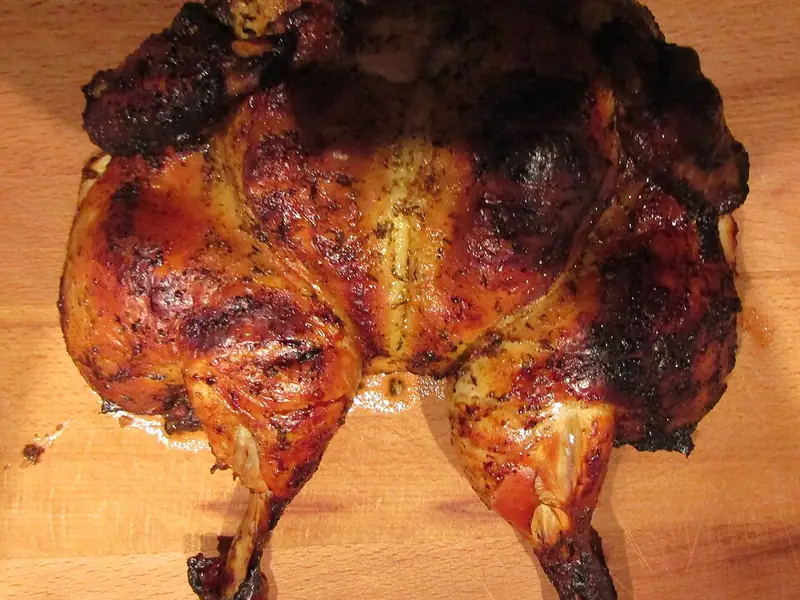
Piri Piri Chicken
Spatchcocked chicken marinated in a fiery bird's eye chilli, garlic and vinegar sauce, grilled hard and basted…
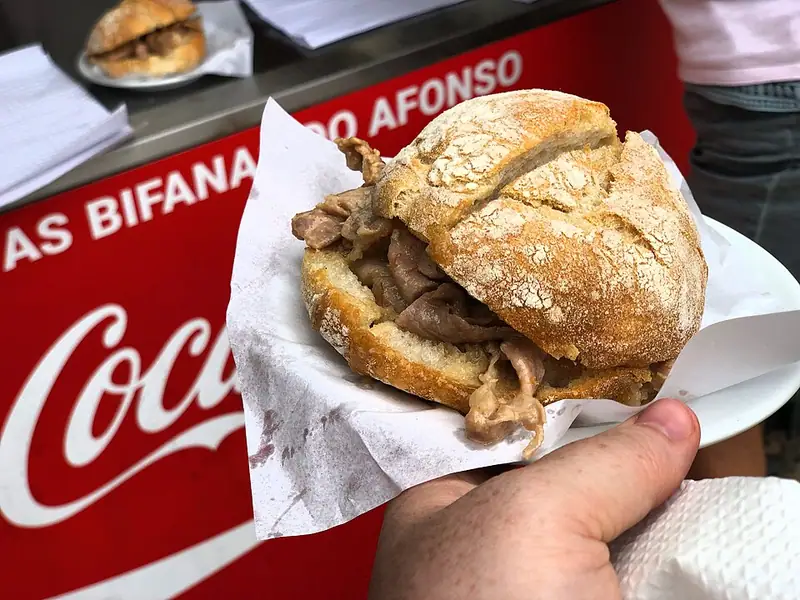
Bifana
Thin pork steaks marinated in white wine, garlic and paprika, cooked fast in the marinade and piled into a crusty…
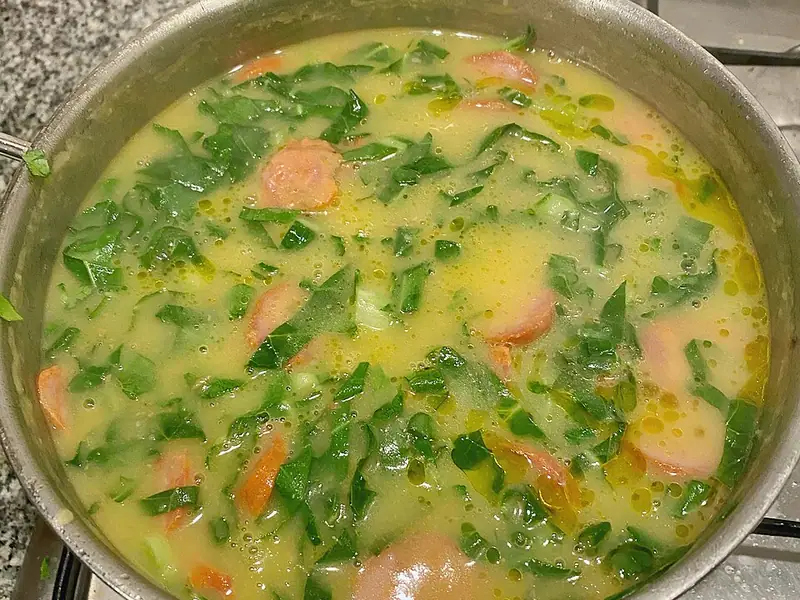
Caldo Verde
Potato and onion blended into a smooth base, with finely shredded couve and a slice of chouriço added at the last…
Francesinha
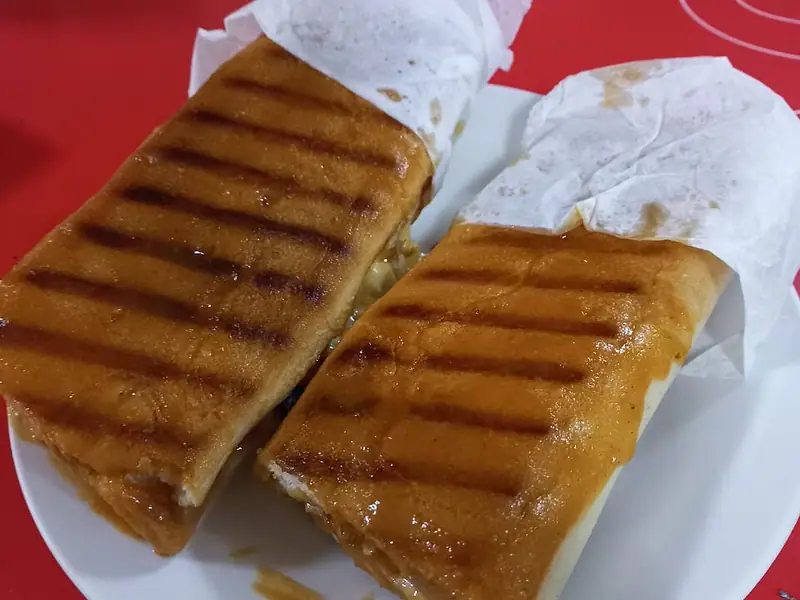
Porto's sandwich: steak, sausage and ham between bread, wrapped in melted cheese and flooded with a beer and tomato…