Vinegar Cabbage
Cabbage torn by hand rather than cut, fried hard with dried chilli and finished with black vinegar. Five minutes, and the tearing genuinely matters.
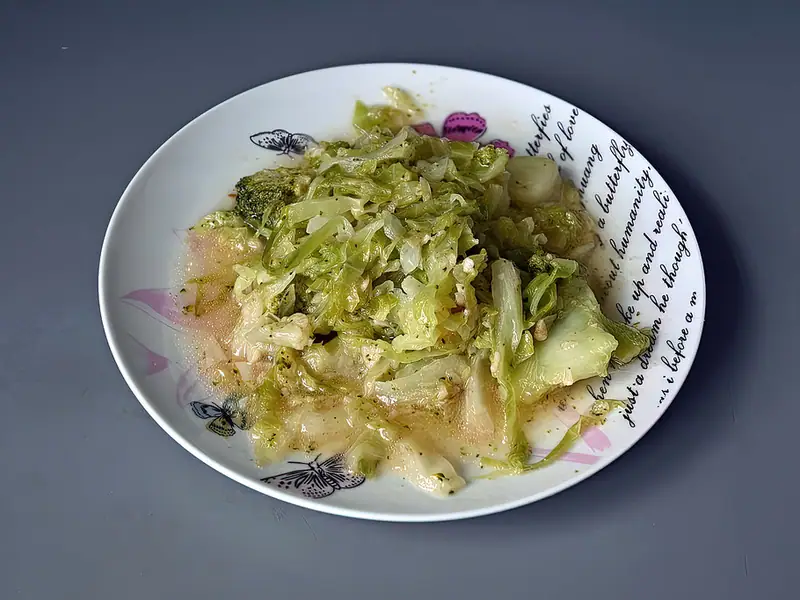
Photograph credit: Sautéed Cabbage by Choo Yut Shing · CC BY 2.0 · Flickr
Storing and Planning Ahead
Best immediately. Refrigerated 1 day and eaten cold.
How to Make Vinegar Cabbage
Tap a step to highlight it, or turn on Cook Mode for large type and step-by-step focus.
-
Tear the cabbage into rough pieces with your hands, discarding the thickest core. Shake it dry.
-
Heat the wok until it smokes, then add the oil.
-
Add the dried chillies and Sichuan peppercorns and toast 20 seconds, until fragrant.
-
Add the garlic and ginger for 15 seconds.
-
Add the cabbage all at once and toss hard over maximum heat 3 minutes, until the edges are charred in places and the stems still snap.
-
Add the soy sauce, sugar and salt and toss 30 seconds more.
-
Take the wok off the heat, add the vinegar and sesame oil, toss once and serve immediately.
Something wrong or unclear in this recipe? Report a problem with this recipe.
Tips for Success
- Tear it, do not shred it. Ragged edges hold the dressing.
- Maximum heat and keep it moving. It should char in places.
- Vinegar off the heat, or the aroma goes.
Why the Method Is What It Is
Tear the cabbage into rough pieces instead of shredding it. Torn edges are ragged and porous and take up the vinegar and oil, while knife-cut edges are sealed and smooth and the dressing runs off — the same principle as the smashed cucumber. Add the vinegar at the very end, off the heat: Chinkiang vinegar is aromatic rather than merely sour and most of that aroma boils away within seconds in a hot wok.
Good Alongside
Steamed rice · Braised pork · A cold beer
Changing the Recipe
- Dried chilli flakes can stand in for the red chillies. Heat varies a great deal between chillies and between jars, so start with a small pinch and add more to taste.
- If you only have ground ginger, a quarter-teaspoon for each tablespoon of fresh is the ratio usually given; it tastes warmer and less bright than the fresh root.
- An eighth of a teaspoon of garlic powder per clove is the stand-in usually given when you are out of fresh garlic; it will not brown the same way, and it burns easily, so add it with the liquid.
Nutrition per Serving
Per serving, calculated from the ingredient list with USDA FoodData Central figures (SR Legacy). A calculation, not a laboratory analysis: brands, cuts and how you measure change the real numbers. How the figures are worked out.
Your notes on this recipe
Cooked this? Keep a note for next time
Compiled by Turab
Checked by script for timings, diet labels and nutrition arithmetic. How the recipes are checked. Found a mistake? Tell us.
First published ; last changed .
You Might Also Like
More Chinese cooking and dinner ideas from Weekly Delight.
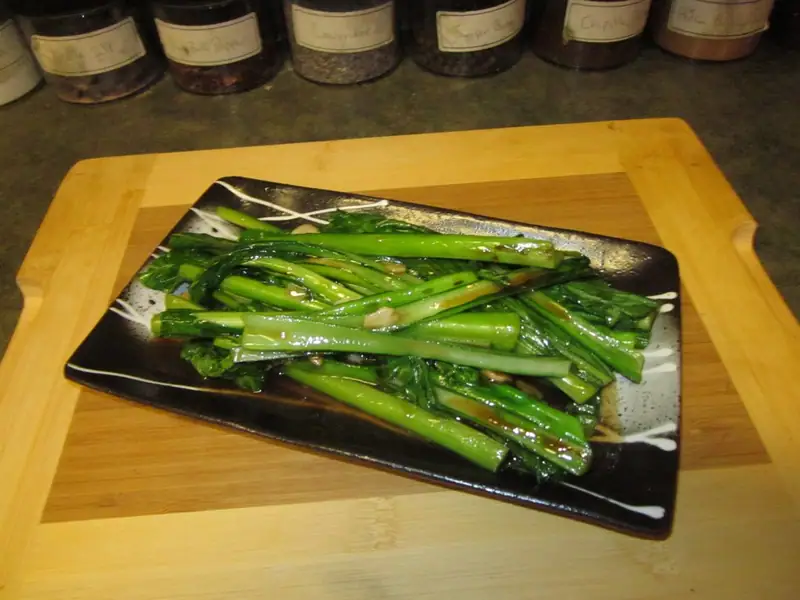
Choy Sum in Oyster Sauce
Choy sum blanched in oiled salted water and dressed in warmed oyster sauce. Three minutes, and the oil in the water…

Eggplant with Garlic Sauce
Aubergine pieces fried until soft and coated in a glossy sauce of garlic, soy sauce, vinegar and chilli.
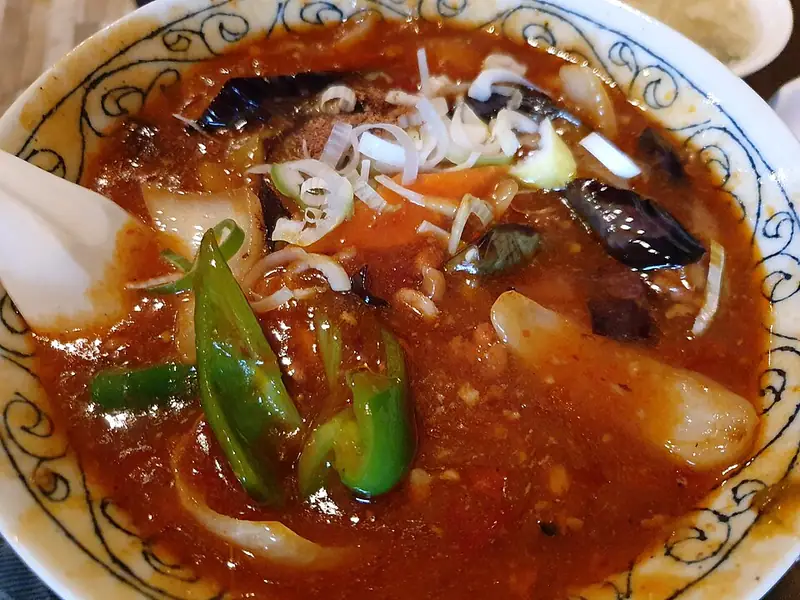
Mapo Eggplant
Aubergine fried until it collapses, then simmered in doubanjiang, garlic and Sichuan pepper. The vegetarian cousin…

Yuxiang Aubergine
Aubergine strips simmered until silky in a sweet, sour and spicy Sichuan sauce of chilli bean paste, garlic and…
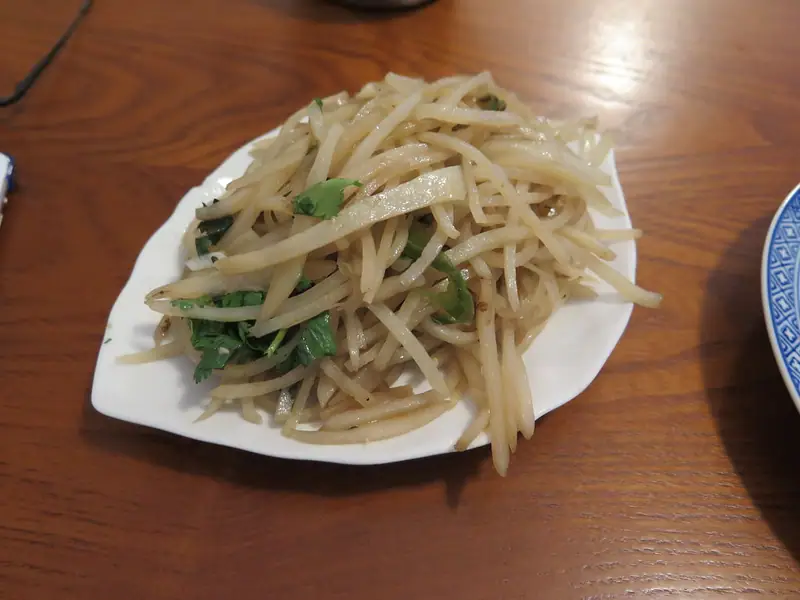
Hot and Sour Potato Slivers
Potato cut into matchsticks, rinsed of starch and fried for ninety seconds so it stays crunchy. Sour, hot, and…
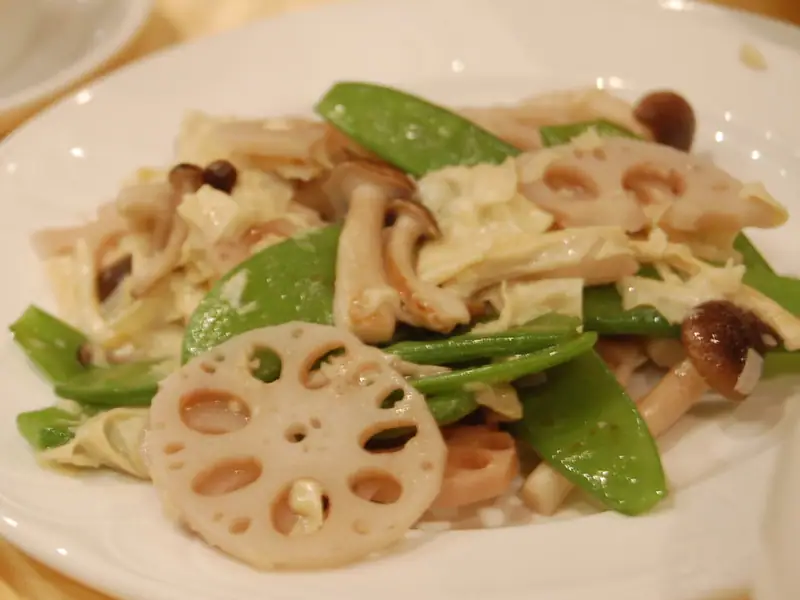
Stir-Fried Lotus Root
Lotus root sliced thin, rinsed of its starch and fried for barely two minutes, so it stays as crisp as an apple.