Courgette Lasagne
Courgette planks salted, griddled and used in place of pasta, under a proper ragù and a béchamel. The griddling is what stops it flooding the dish.
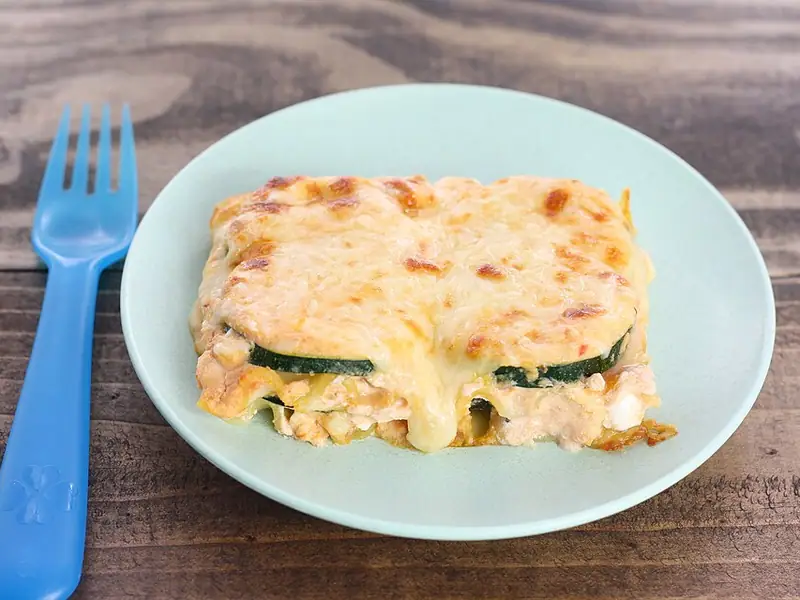
Photograph credit: Child Care Recipes (Team Nutiriton) (20212203-FNS-UNC-8847) by USDAgov · Public domain · Wikimedia Commons
Before You Start
Salt and griddle. Skipping either gives you a soup with cheese on top.
Cook the ragù drier than you would for pasta.
The full hour of resting is what lets you lift out a slice rather than a spoonful.
Cooking Courgette Lasagne
Tap a step to highlight it, or turn on Cook Mode for large type and step-by-step focus.
-
Lay the courgette planks on a rack in a single layer, salt both sides, and leave 20 minutes. Beads of water will form.
-
Pat every plank thoroughly dry with kitchen paper.
-
Brush a griddle pan with oil and cook the planks in batches over a high heat, 2 minutes a side, until marked and pliable. Set aside on the rack.
-
For the ragù, heat the oil and cook the onion and celery 8 minutes, then the garlic for 1 minute.
-
Add the mince, break it up, and brown it hard for 10 minutes, letting it catch a little.
-
Stir in the tomato purée and cook 2 minutes, then the tomatoes, oregano, salt and chilli flakes.
-
Simmer uncovered 20 minutes, until thick enough to hold a channel when you drag a spoon through it. Drier than a pasta ragù.
-
For the béchamel, melt the butter, whisk in the cornflour and cook 1 minute, then add the milk a third at a time, whisking smooth. Simmer 3 minutes until it coats a spoon, then season with the nutmeg and salt.
-
Layer in a 23 x 33 cm dish: a little béchamel, then courgette planks, ragù, béchamel and mozzarella. Repeat twice, finishing with béchamel, mozzarella and the Parmigiano.
-
Bake at 190°C / 375°F for 40 minutes, then uncover if needed for 10 minutes more, until bubbling and browned. Rest 1 hour before cutting — this is not optional in a dish with no pasta to hold it together.
Related guides: Prep, cook and total time · Pan and tin size.
Something wrong or unclear in this recipe? Report a problem with this recipe.
Why It Works
A courgette is over ninety per cent water and a lasagne made with raw planks releases all of it into the dish. Salting draws a large part of it out by osmosis in twenty minutes, and griddling drives off more while adding the browning that raw courgette lacks entirely. Between them they turn a watery idea into a dish that holds a slice. The ragù is also cooked drier than usual, because there is no pasta here to absorb liquid.
Storage and Reheating
Refrigerated for 4 days and better on day two. Reheat covered at 180°C / 356°F for 30 minutes.
Swaps and Variations
- An eighth of a teaspoon of garlic powder per clove is the stand-in usually given when you are out of fresh garlic; it will not brown the same way, and it burns easily, so add it with the liquid.
- Fresh herbs work in place of the dried oregano at roughly three times the quantity — a teaspoon of dried is about a tablespoon of fresh, chopped.
What to Serve Alongside
- A sharp green salad
- A glass of Chianti
- Garlic bread, if carbohydrate is not the point
Sides from the same cuisine on this site: Ciabatta, Citrus Fennel Salad, Garlic Confit Focaccia.
Still Wondering?
How long does Courgette Lasagne take to make?
35 minutes of preparation and 1 hour 30 minutes to 1 hour 50 minutes of cooking, plus 1 hour 20 minutes of resting, so allow 3 hours 25 minutes to 3 hours 45 minutes from start to finish. The recipe serves 6.
What's in a Serving
Per serving, calculated from the ingredient list with USDA FoodData Central figures (SR Legacy). A calculation, not a laboratory analysis: brands, cuts and how you measure change the real numbers. How the figures are worked out.
Your notes on this recipe
Cooked this? Keep a note for next time
Compiled by Turab
Checked by script for timings, diet labels and nutrition arithmetic. How the recipes are checked. Found a mistake? Tell us.
First published ; last changed .
You Might Also Like
More Italian cooking and dinner ideas from Weekly Delight.
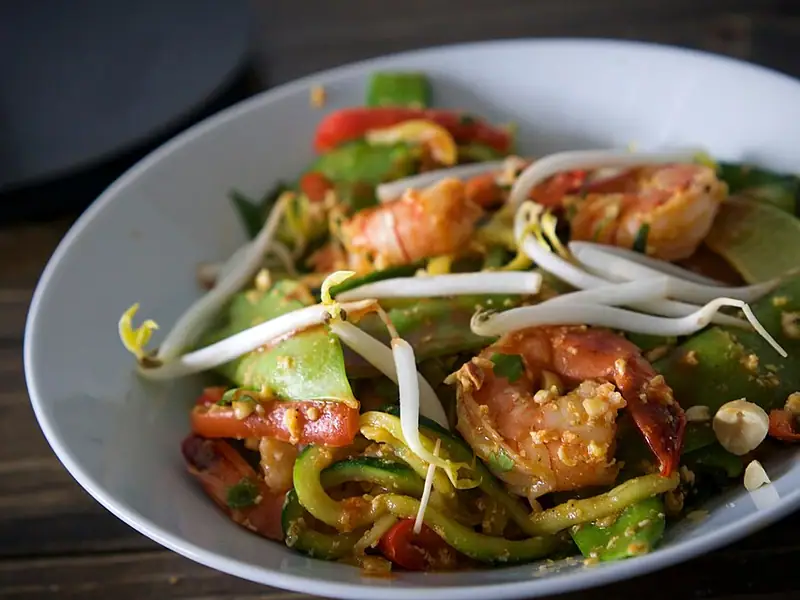
Garlic Prawns with Courgette Noodles
Prawns cooked hard in garlic, chilli and olive oil, tossed through courgette ribbons that never see a pan — 45 g of…

Trippa alla Fiorentina
Tripe simmered in a tomato and vegetable sauce for 2 hours until tender, finished with Parmesan, in the style of…

Vegetable Lasagne
Layers of pasta, roasted courgette, pepper and mushroom in tomato sauce and white sauce, topped with mozzarella and…

Vegetarian Lasagne
Layers of pasta, roasted aubergine, courgette and pepper in tomato sauce, with ricotta and a golden cheese topping.
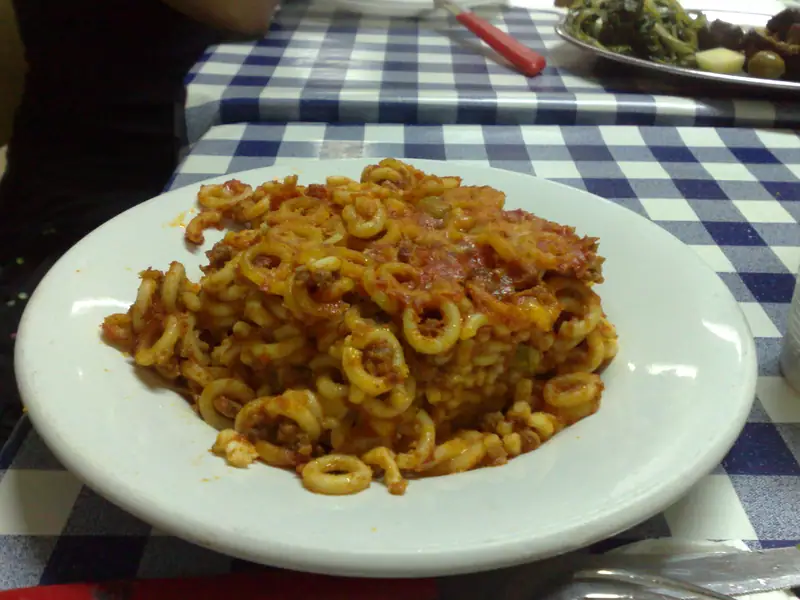
Anelletti al Forno
Little pasta rings baked with ragù, peas and cheese into something you can cut in slices. Palermo eats it at room…


Halibut with Lemon Caper Sauce
Pan-seared halibut fillets in a quick lemon, caper and butter pan sauce. Four servings in 25 minutes.