Fabada Asturiana
Enormous creamy fabes beans stewed with chorizo, morcilla and pork shoulder until the broth turns orange with paprika fat. Asturias in a pot, and a dish designed for cold, wet Atlantic weather.
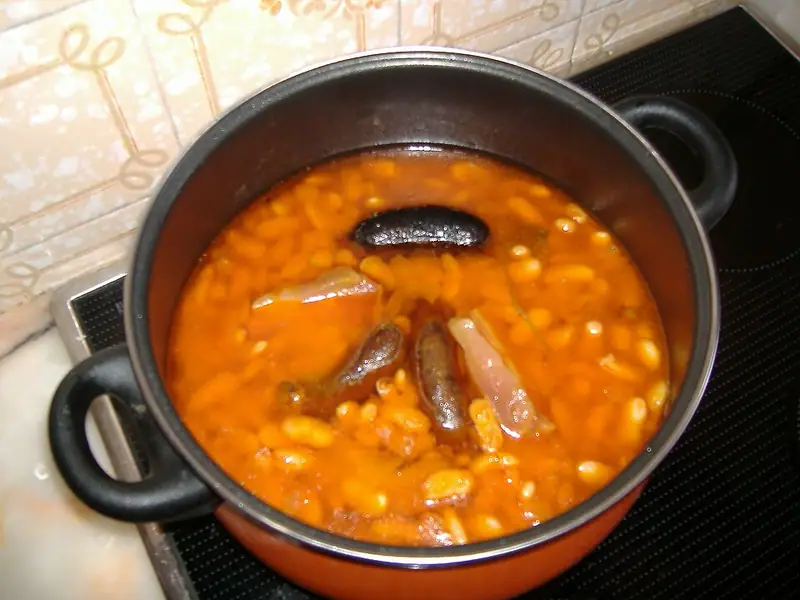
Photograph credit: Fabada by sergio.solar · Public domain · Wikimedia Commons
Don't Make These Mistakes
Shake, never stir. Broken beans give a cloudy fabada and Asturians will notice.
Salt only at the very end, once you know how much the cured meats have contributed.
It is significantly better the next day, which is how it is traditionally eaten.
Making Fabada Asturiana
Tap a step to highlight it, or turn on Cook Mode for large type and step-by-step focus.
-
Drain the soaked beans and put them in a wide, heavy pot. Cover with cold water by 4 cm.
-
Add the chorizo, morcilla, lacón, pancetta, onion, garlic and bay leaf. Do not add salt yet — the meats are heavily salted.
-
Bring slowly to the boil and skim off the foam thoroughly for the first 10 minutes.
-
Add the olive oil, reduce to the barest simmer, and cook uncovered for 2½ to 3 hours.
-
Never stir with a spoon. To move things around, take the pot by the handles and shake it in a circular motion.
-
Twice during cooking, add a small glass of cold water to shock the beans and stop them bursting.
-
After 90 minutes, lift out a ladleful of broth and dissolve the saffron and pimentón into it, then return it to the pot.
-
When the beans are completely creamy and the broth has thickened and turned orange, taste and add salt if needed.
-
Lift out the meats, slice them, and return them to the pot. Rest 20 minutes off the heat before serving.
Related guide: Prep, cook and total time.
Something wrong or unclear in this recipe? Report a problem with this recipe.
Why It Works
The beans are never stirred with a spoon — the pot is shaken instead — because stirring breaks their delicate skins and clouds the broth. Adding a splash of cold water twice during cooking, the technique called asustar, shocks the beans and helps them cook evenly without bursting.
Storage and Reheating
Refrigerate up to 4 days and freeze 3 months. Reheat very gently, shaking rather than stirring.
If You're Missing Something
- An eighth of a teaspoon of garlic powder per clove is the stand-in usually given when you are out of fresh garlic; it will not brown the same way, and it burns easily, so add it with the liquid.
Good With
- Asturian cider, poured from a height
- Crusty bread
- Rice pudding (arroz con leche) afterwards
Sides from the same cuisine on this site: Patatas a lo Pobre, Pisto, Escalivada.
Common Questions About Fabada Asturiana
How long does Fabada Asturiana take to make?
20 minutes of preparation and 2 hours 30 minutes of cooking, plus 8 hours 20 minutes of soaking, so allow 11 hours 10 minutes from start to finish. The recipe serves 6.
What's in a Serving
No nutrition figures are given for this recipe: they cannot be worked out reliably from its ingredient list (some ingredient lines cannot be read). Why some recipes have none.
Your notes on this recipe
Cooked this? Keep a note for next time
Compiled by Turab
Checked by script for timings, diet labels and nutrition arithmetic. How the recipes are checked. Found a mistake? Tell us.
First published ; last changed .
You Might Also Like
More Spanish cooking and dinner ideas from Weekly Delight.

Carrillada Iberica
Iberian pork cheeks braised in red wine, onion and carrot for 2 hours 30 minutes until the meat can be cut with a…

Menestra de Verduras
A Navarra stew of artichokes, peas, broad beans, asparagus and ham in a light sauce, ready in 55 minutes.

Cocido Montanes
A Cantabrian stew of white beans, cabbage, pork, chorizo and morcilla simmered for 2 hours 30 minutes after an…
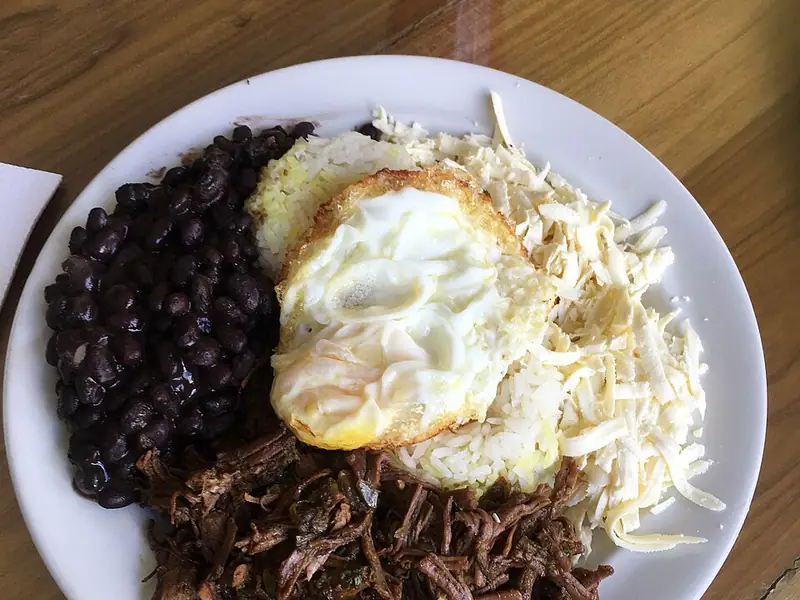
Pabellón Criollo
Venezuela's national plate: shredded beef, black beans, white rice and fried sweet plantain, served side by side and…
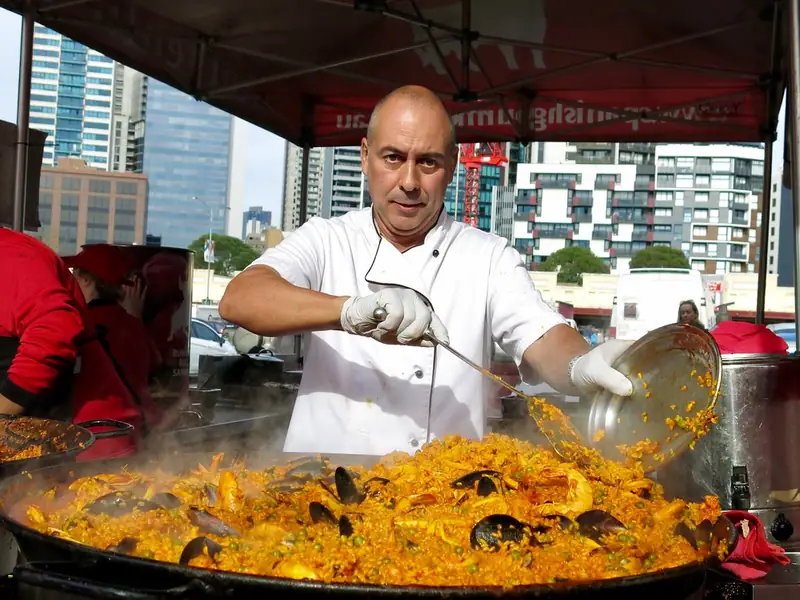
Paella Valenciana
The Valencian original, with chicken, rabbit and beans rather than seafood, cooked flat in a wide pan until a…


Callos a la Madrilena
Madrid style tripe stew with chorizo, morcilla, chickpeas and smoked paprika, simmered for 2 hours 30 minutes.