Pad Thai
The real thing is sour, salty and only lightly sweet — a world away from the ketchup-orange version. Tamarind, palm sugar and fish sauce make the sauce; everything else is speed.
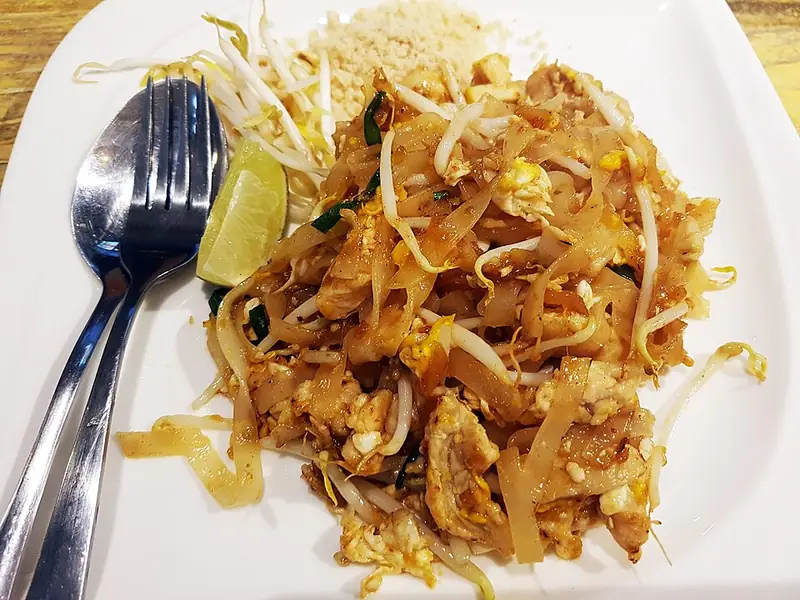
Photograph credit: Pad Thai 2017-12-17 (2) by Index Librorum Permissorum · CC0 · Wikimedia Commons

Photograph credit: Pad Thai 2018-01-07 (1) by Index Librorum Permissorum · CC0 · Wikimedia Commons
The Method for Pad Thai
Tap a step to highlight it, or turn on Cook Mode for large type and step-by-step focus.
-
Soak the rice noodles in warm — not boiling — water for 25 to 30 minutes until pliable but still firm and slightly chalky at the centre. Drain well.
-
Warm the tamarind, fish sauce, palm sugar and chilli flakes in a small pan until the sugar dissolves, then taste. It should be sour first, salty second and only just sweet.
-
Prepare everything else and line it up beside the hob. Pad Thai cooks in four minutes and there is no time to chop mid-stir-fry.
-
Heat a wok over the highest heat, add 2 tablespoons of oil and fry the tofu for 3 minutes until golden. Add the prawns and cook 90 seconds until just pink. Remove both.
-
Add the remaining oil and fry the shallots, garlic and preserved radish for 45 seconds.
-
Push everything to one side, pour the beaten eggs into the space, let them set for 20 seconds, then scramble roughly.
-
Add the drained noodles and the sauce and toss constantly for 2 to 3 minutes, until the noodles have absorbed the sauce and turned glossy and pliable.
-
Return the prawns and tofu, add most of the beansprouts and spring onions, and toss for 45 seconds more.
-
Serve at once with crushed peanuts, the remaining raw beansprouts, lime wedges, chilli flakes and sugar on the side so each person can adjust their own.
Something wrong or unclear in this recipe? Report a problem with this recipe.
Things to Watch For
- Never boil the noodles. Soaked noodles finish in the wok; boiled ones turn into porridge.
- Cook no more than two portions at a time in a domestic wok, or the temperature crashes.
- The condiment tray is part of the dish in Thailand. Put out sugar, chilli, fish sauce and lime.
Changing the Recipe
- Out of spring onions? A small regular onion, finely sliced, or a few chives stirred in at the end both cover the job.
- Lemon is the everyday swap for limes in this kind of dish — the acidity plays the same role even though the flavour is not identical.
- An eighth of a teaspoon of garlic powder per clove is the stand-in usually given when you are out of fresh garlic; it will not brown the same way, and it burns easily, so add it with the liquid.
A Little Background
Soaking rather than boiling the rice noodles leaves them slightly underdone, so they finish cooking in the wok while absorbing the sauce instead of turning to mush. The classic Thai balance here is roughly equal parts tamarind, fish sauce and palm sugar — sweetness is a supporting note, never the lead.
To Go With It
A cold Singha or an off-dry Riesling · Serve with a papaya salad on the side · Finish with mango sticky rice
Leftovers
Best immediately. Keeps 2 days refrigerated; reheat in a hot wok with a splash of water. The noodles soften on standing.
Pad Thai Nutrition
Per serving, calculated from the ingredient list with USDA FoodData Central figures (SR Legacy). A calculation, not a laboratory analysis: brands, cuts and how you measure change the real numbers. How the figures are worked out.
Your notes on this recipe
Cooked this? Keep a note for next time
Compiled by Turab
Checked by script for timings, diet labels and nutrition arithmetic. How the recipes are checked. Found a mistake? Tell us.
First published ; last changed .
You Might Also Like
More Thai cooking and dinner ideas from Weekly Delight.

Instant Pot Pad Thai
Rice noodles, chicken and egg cooked together under pressure in a tamarind, fish sauce and sugar sauce, topped with…

Thai Boat Noodles
A dark, spiced beef noodle soup with rice noodles, bean sprouts, morning glory and crispy garlic, served in small…
Crying Tiger Beef
Grilled beef sliced across the grain and served with nam jim jaew, a roasted rice and chilli dipping sauce. The…

Drunken Noodles
Wide rice noodles stir-fried over high heat with chicken, holy basil, chilli, garlic and a dark soy and oyster sauce.
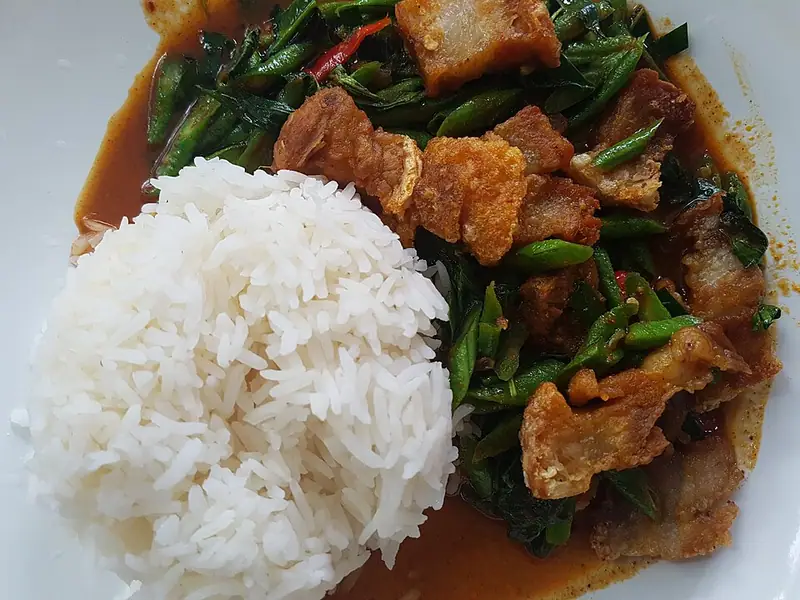
Pad Prik King
Green beans and pork stir-fried in red curry paste with no coconut milk at all. A dry curry, and thirty minutes.


Gaeng Som
A hot, sour southern Thai curry of fish and vegetables in a tamarind and chilli broth, thickened with a pounded…