Penne alla Vodka
The pink sauce, done properly: tomato purée cooked hard until it darkens, vodka to carry the aromatics, and cream stirred in off the boil. Twenty-five minutes and there is a reason it never went away.
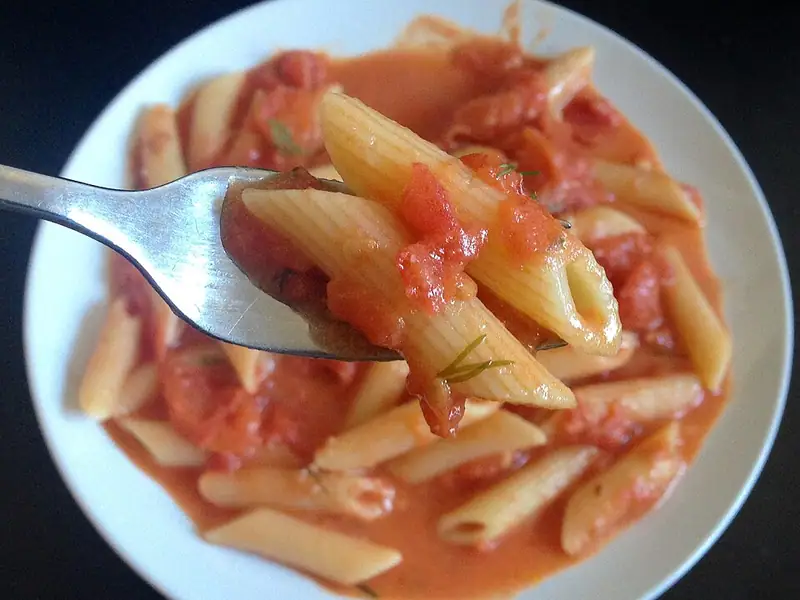
Photograph credit: Erica's Vodka Sauce by Joy · CC BY 2.0 · Wikimedia Commons
Where This Goes Wrong
Double-concentrated purée in a tube or tin, not passata. This sauce is built on concentrate.
Watch for the colour change. Undercooked purée tastes tinny and no amount of cream hides it.
Off the heat for the cheese, as always.
Cooking Penne alla Vodka
Tap a step to highlight it, or turn on Cook Mode for large type and step-by-step focus.
-
Heat the oil and butter in a wide pan over medium and cook the onion 8 minutes until soft and translucent.
-
Add the garlic and chilli flakes and cook 1 minute.
-
Add the tomato purée and cook it, stirring constantly, for 4 to 5 minutes. It will darken from orange to brick red and start to stick — that colour change is the whole point of the step.
-
Pour in the vodka and stir hard, scraping the base clean. Let it bubble 2 minutes until the sharp alcohol smell has gone.
-
Take the pan off the heat and stir in the cream until the sauce turns an even coral pink. Return to a very low heat.
-
Cook the penne in well-salted water until 1 minute short of the packet time, reserving 300 ml of the water.
-
Drain and add the pasta to the sauce with 150 ml of the water and the salt, and toss over medium heat for a full minute.
-
Take off the heat, add the Parmigiano and basil, and toss again until glossy, loosening with more pasta water as needed.
Related guide: Ingredient substitutions.
Something wrong or unclear in this recipe? Report a problem with this recipe.
Why It Works
The vodka is not decoration. Some of the aroma compounds in tomato are alcohol-soluble and not water-soluble, so they are locked away in a sauce made without it; ethanol releases them, and then most of it boils off. Cooking the tomato purée in oil until it turns brick-red rather than orange is the other half — that is caramelisation, and it is what gives a twenty-minute sauce the depth of a long-simmered one. The cream goes in off a hard boil because dairy proteins curdle in an acidic sauce at a rolling temperature.
Leftovers, Reheating and Keeping
Refrigerated for 3 days. Reheat with a splash of water over low heat, stirring.
Common Substitutions & Variations
- In a sauce, full-fat crème fraîche can usually take the place of the double cream; single cream is thinner and more likely to split if it boils, so keep it below a simmer.
- An eighth of a teaspoon of garlic powder per clove is the stand-in usually given when you are out of fresh garlic; it will not brown the same way, and it burns easily, so add it with the liquid.
What to Serve Alongside
- A glass of Barbera
- Rocket salad with lemon
- Focaccia
Sides from the same cuisine on this site: Focaccia Genovese, Rosemary Focaccia, Ciabatta.
The Numbers per Serving
Per serving, an approximate calculation from the ingredient list. Treat it as a rough guide: all the alcohol is counted, though some is lost in cooking. The calories include 7 g of alcohol a serving, which is not part of the protein, carbohydrate or fat. How the figures are worked out.
Vegetarian when made with a hard cheese made without animal rennet in place of the parmigiano-reggiano.
Your notes on this recipe
Cooked this? Keep a note for next time
Compiled by Turab
Checked by script for timings, diet labels and nutrition arithmetic. How the recipes are checked. Found a mistake? Tell us.
First published ; last changed .
You Might Also Like
More Italian cooking and dinner ideas from Weekly Delight.

Rigatoni alla Vodka
Rigatoni in a pink sauce of tomato, cream, parmesan and a splash of vodka, with a pinch of chilli.

Baked Penne
Penne tossed with a tomato and Italian sausage sauce, layered with mozzarella and parmesan and baked for 30 minutes…
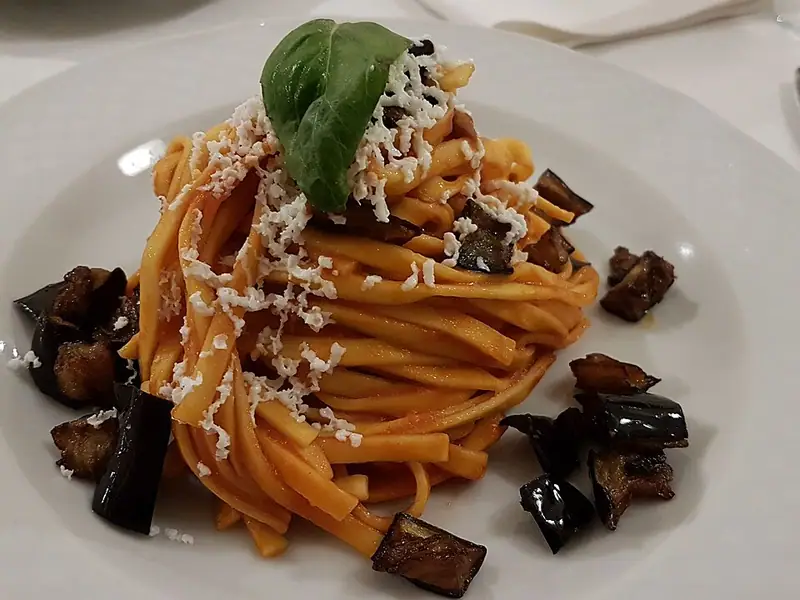
Spaghetti alla Norma
Spaghetti with fried aubergine, tomato sauce, basil and ricotta salata, a Sicilian dish from Catania, ready in 1…

Penne Arrabbiata Bake
Penne tossed in a hot garlic and chilli tomato sauce, topped with mozzarella and parmesan and cooked for 20 minutes.
Spaghetti alla Puttanesca
Anchovy, olive, caper and tomato cooked hard for twenty minutes. Nothing in it is fresh and it is one of the best…


Risotto alla Pescatora
Risotto with prawns, mussels and squid stirred into rice cooked in fish stock, white wine and tomato, in 50 minutes.