Salmorejo
Córdoba's thicker, richer answer to gazpacho: tomatoes, bread, garlic and a great deal of olive oil blended into a smooth orange cream, served cold under chopped egg and jamón.
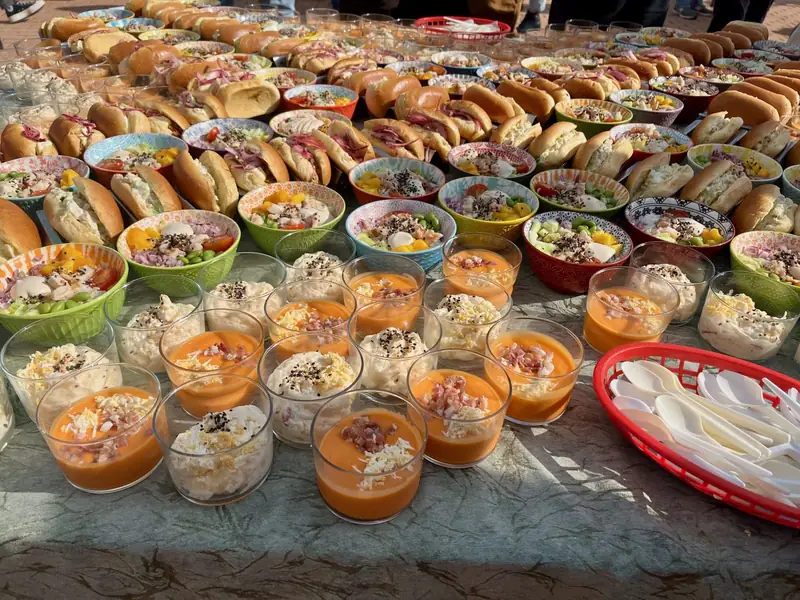
Photograph credit: Food. Salmorejo, ensaladilla, poke. Food served at WordCamp Sevilla 2024. by Luis Rull · CC0 1.0 · Wordpress

Photograph credit: A plate of four open-faced sandwiches on a white napkin. Each sandwich has a thick layer of salmorejo topped with chopped herbs, small pieces of boiled egg, and bits of ibérico. There are a small glass of water and a cup of dark coffee in a saucer are visible in the background. by Nilo Velez · CC0 1.0 · Wordpress
Method
Tap a step to highlight it, or turn on Cook Mode for large type and step-by-step focus.
-
Blend the tomatoes alone until completely liquid, about 2 minutes.
-
Pass the purée through a sieve to remove all skin and seeds. This step is what makes salmorejo velvety rather than pulpy.
-
Tear the bread into the strained tomato and leave it to soak for 20 minutes until completely soft.
-
Blend the soaked bread and tomato with the garlic and salt until smooth.
-
With the motor running on medium, pour in the olive oil in a thin, steady stream.
-
The mixture will visibly thicken and turn from red to a pale coral orange as the oil emulsifies.
-
Add the sherry vinegar and blend for 10 seconds more.
-
Taste and adjust for salt and acidity, then chill at least 3 hours until properly cold.
-
Serve in shallow bowls topped with chopped egg, torn jamón and a final drizzle of olive oil.
Chef’s Tips
- One small garlic clove is enough. Raw garlic dominates a cold soup very quickly.
- Sieve the tomatoes. It takes five minutes and transforms the texture.
- The colour tells you whether the emulsion has worked — pale orange is right, red means the oil has not gone in.
Common Substitutions & Variations
- An eighth of a teaspoon of garlic powder per clove is the usual stand-in when you are out of fresh garlic — it will not caramelise the same way, but it carries the flavour.
Pairing Suggestions
- A cold fino or manzanilla sherry
- Fried aubergine with honey
- Crusty bread
Storage & Reheating
Refrigerate up to 3 days. It thickens as it sits; loosen with a splash of iced water. Do not freeze.
Common questions
How long does Salmorejo take to make?
About 15 minutes of hands-on work — 15 minutes of preparation and of cooking — plus 3 hours of chilling, so allow 3 hours 15 minutes from start to finish. The recipe serves 4.
What are the key tips for making Salmorejo?
One small garlic clove is enough. Raw garlic dominates a cold soup very quickly. Sieve the tomatoes. It takes five minutes and transforms the texture. The colour tells you whether the emulsion has worked — pale orange is right, red means the oil has not gone in.
What should I serve with Salmorejo?
A cold fino or manzanilla sherry; Fried aubergine with honey; Crusty bread.
Can Salmorejo be made ahead or frozen?
Refrigerate up to 3 days. It thickens as it sits; loosen with a splash of iced water. Do not freeze.
Is Salmorejo suitable for a special diet?
This recipe is vegetarian and no added sugar. Those labels are checked against the ingredient list, so a dish is only marked when nothing in it contradicts the claim.
How many calories are in Salmorejo?
About 412 kcal per serving, with 9 g protein, 32 g carbohydrate and 28 g fat. The figures are calculated from the ingredient list and are an estimate.
Nutritional Highlights
Per serving, calculated from the ingredient list. Treat these as an estimate — brands and cuts vary.
Reader Reviews
Cooked this? Leave a review
Written and tested by Turab
One person, one kitchen — no test kitchen, no team. How every recipe on this site is checked before it goes up.
Related Recipes
More Spanish cooking and healthy ideas from Weekly Delight.
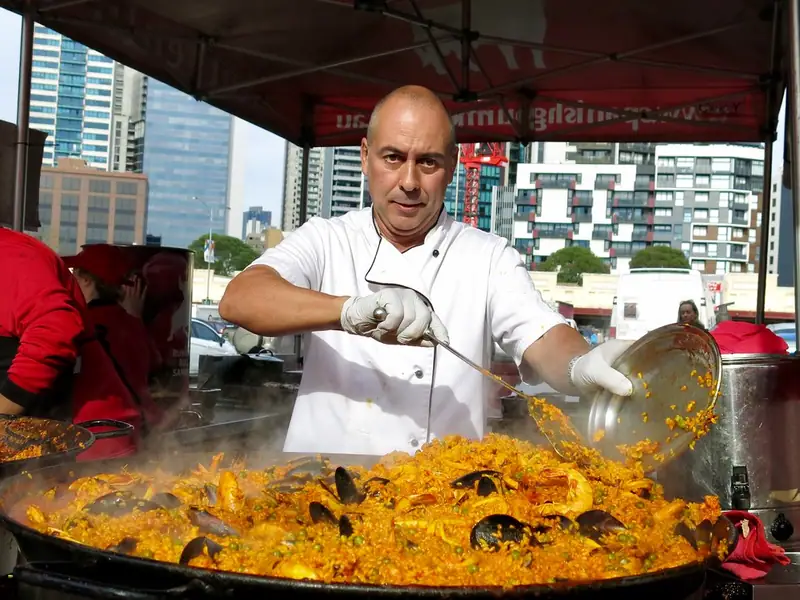
Paella Valenciana
The Valencian original, with chicken, rabbit and beans rather than seafood, cooked flat in a wide pan until a…
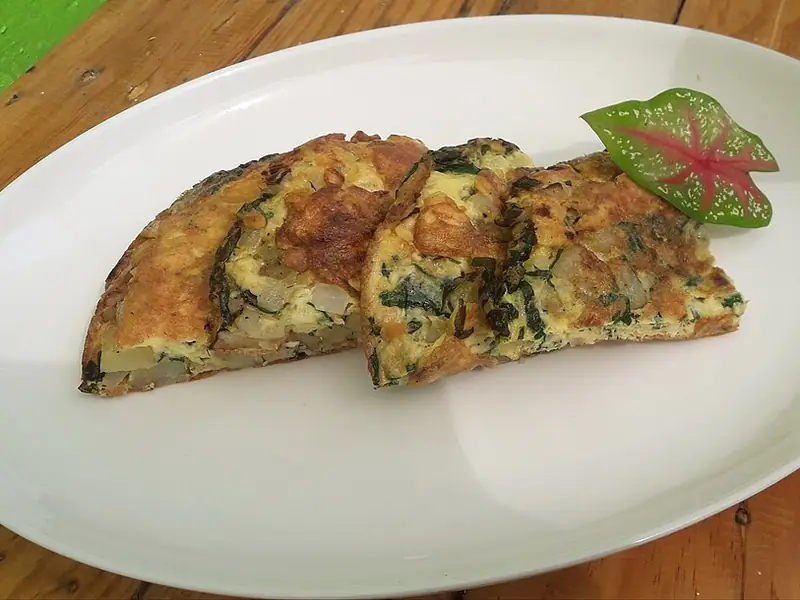
Tortilla Española
Potatoes and onion confited slowly in olive oil, then bound in egg and cooked until the centre is barely set and…

Red Wine Sangria
Spanish red wine steeped overnight with brandy, citrus and stone fruit, topped with soda only at the moment of…
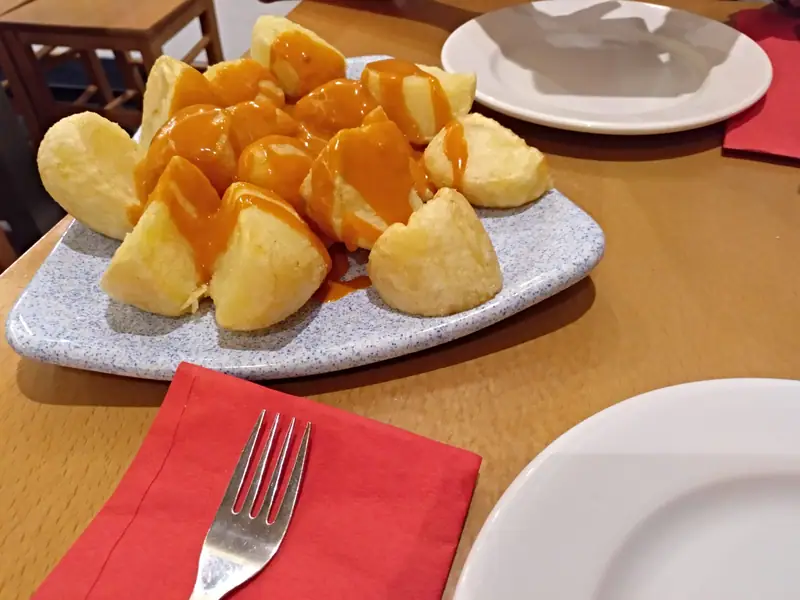
Patatas Bravas
Twice-cooked potatoes with a shattering exterior and a fluffy interior, under a smoky brava sauce that carries…