Thai Green Curry
Cracking the coconut cream until the oil separates, then frying the paste in it, is the step that turns a flat curry into a fragrant one. Twenty-five minutes from paste to table.
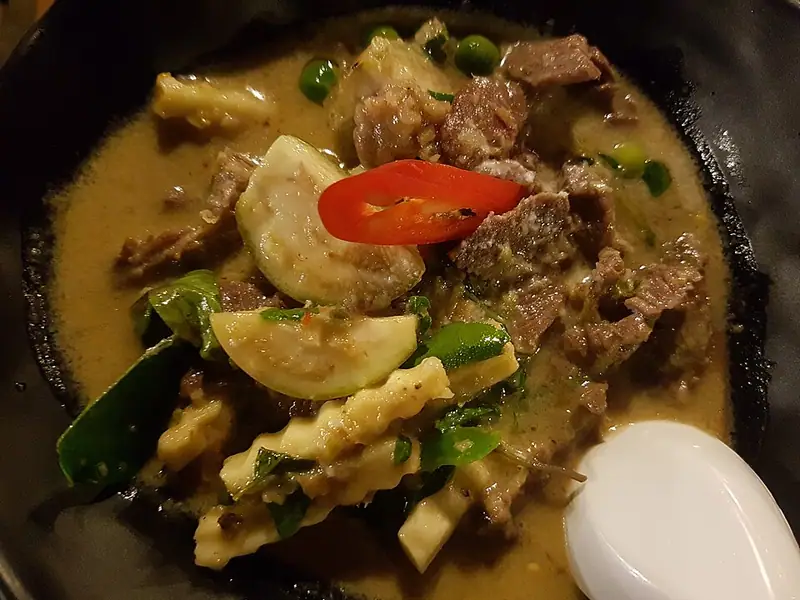
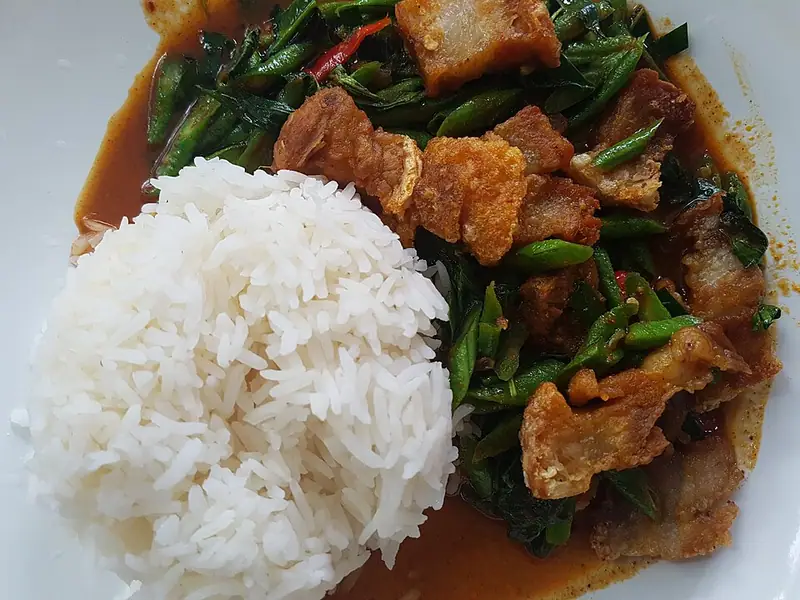
Photograph credit: Beef green curry - Chiang Mai - 2017-07-08 (001) by Iudexvivorum · CC0 · Wikimedia Commons
Where This Goes Wrong
Full-fat coconut milk only. Light coconut milk cannot crack and the curry will taste thin.
Fry the paste properly — three minutes, not thirty seconds. This is where the flavour is made.
Thai basil is not Italian basil; its anise note is central. If unavailable, use extra lime leaves.
How to Make Thai Green Curry
Tap a step to highlight it, or turn on Cook Mode for large type and step-by-step focus.
-
Open the tin of coconut milk without shaking it and spoon the thick cream from the top into a wok. Reserve the thin milk below.
-
Heat the thick cream over medium-high heat for 4 to 6 minutes, stirring, until it splits and clear coconut oil pools at the edges.
-
Add the curry paste and fry it in that oil for 3 to 4 minutes, pressing and stirring, until intensely fragrant and darkened.
-
Add the chicken and stir to coat, cooking 3 minutes until sealed.
-
Pour in the reserved thin coconut milk and the coconut cream, add the lime leaves, and bring to a gentle simmer.
-
Add the aubergine and bamboo shoots and simmer for 10 to 12 minutes until the aubergine is tender.
-
Season with the fish sauce and palm sugar, tasting as you go — it should be salty, then sweet, with heat behind it.
-
Take off the heat and stir in most of the Thai basil, the sliced chillies and the lime juice.
-
Serve with jasmine rice, scattered with the remaining basil.
Related guide: Choosing rice.
Something wrong or unclear in this recipe? Report a problem with this recipe.
Why the Method Works
Coconut cream is an emulsion; heating it hard until it splits releases pure coconut oil, and frying the curry paste in that oil extracts fat-soluble aromatics from the lemongrass, galangal and chillies far more effectively than simmering ever could. This step, called cracking, is what separates Thai curry from a coconut stew.
After You've Cooked It
Refrigerate 3 days, freeze 2 months. Add fresh basil and lime on reheating to revive the aromatics.
Swaps and Variations
- If coconut is a problem, a cooking cream (dairy or plant-based) can stand in for the coconut milk in a sauce; the dish will lose the coconut flavour and taste noticeably different.
- Dried chilli flakes can stand in for the red chillies. Heat varies a great deal between chillies and between jars, so start with a small pinch and add more to taste.
- Lemon is the everyday swap for lime in this kind of dish — the acidity plays the same role even though the flavour is not identical.
Good With
- A cold lager or an off-dry Riesling
- Serve with jasmine rice and a cucumber salad
- Finish with fresh mango
Thai Green Curry Nutrition
Per serving, an approximate calculation from the ingredient list. Treat it as a rough guide: a cooked weight is worked out with raw figures, so those lines run high; part of the energy comes from foods, or weights per item, with no recorded source. How the figures are worked out.
Your notes on this recipe
Cooked this? Keep a note for next time
Compiled by Turab
Checked by script for timings, diet labels and nutrition arithmetic. How the recipes are checked. Found a mistake? Tell us.
First published ; last changed .
You Might Also Like
More Thai cooking and dinner ideas from Weekly Delight.
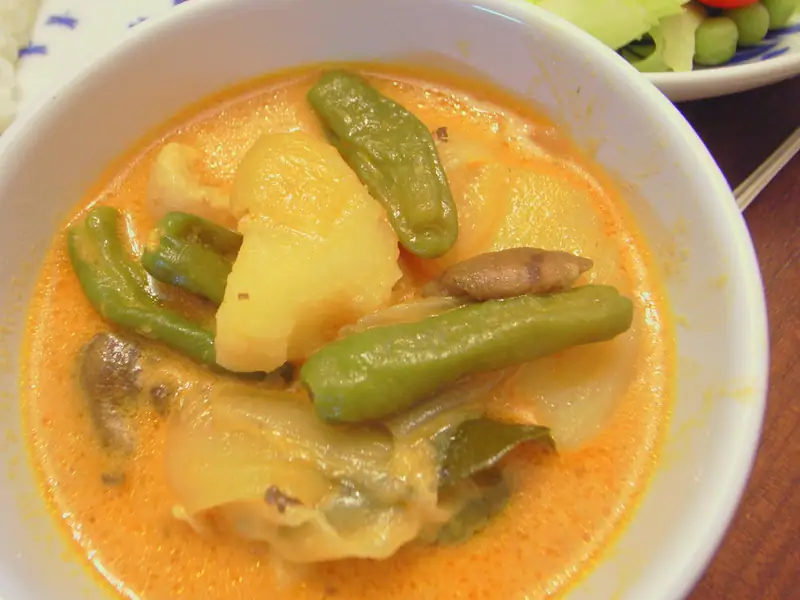
Thai Yellow Curry
The mildest of the Thai curries, yellow with turmeric and thick with potato. The one to cook for people who say they…
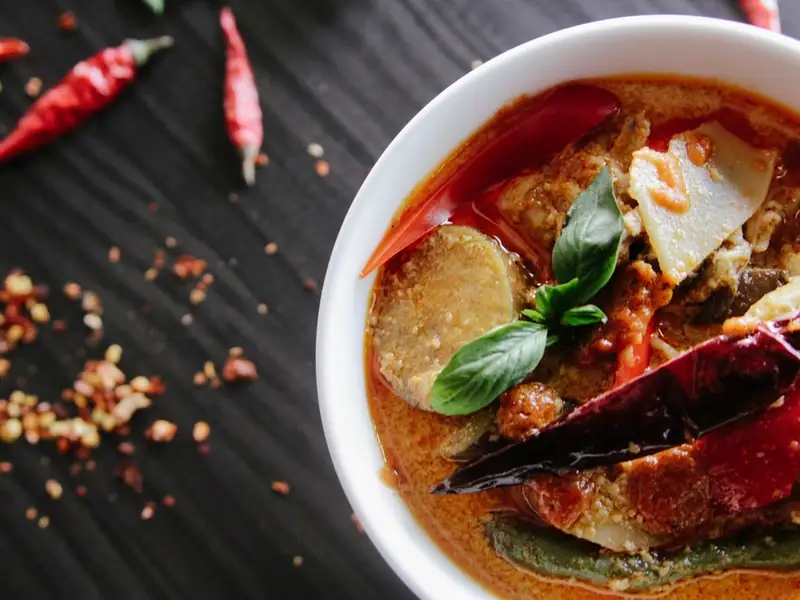
Thai Red Curry
Chicken and vegetables in a coconut curry built by cracking the cream, frying the paste in the separated oil, and…
Panang Curry
A thick, sweet red curry finished with kaffir lime and crushed peanuts. Drier than the other Thai curries, and richer.

Jungle Curry
A fiery northern Thai curry without coconut milk, made with red curry paste, chicken, aubergine, bamboo shoots, long…

Instant Pot Pad Thai
Rice noodles, chicken and egg cooked together under pressure in a tamarind, fish sauce and sugar sauce, topped with…

Pad Prik King
Green beans and pork stir-fried in red curry paste with no coconut milk at all. A dry curry, and thirty minutes.