Spaghetti Squash
A spaghetti squash roasted until tender, then forked into golden strands and tossed with garlic butter, Parmesan and parsley. A light, low-effort pasta alternative.
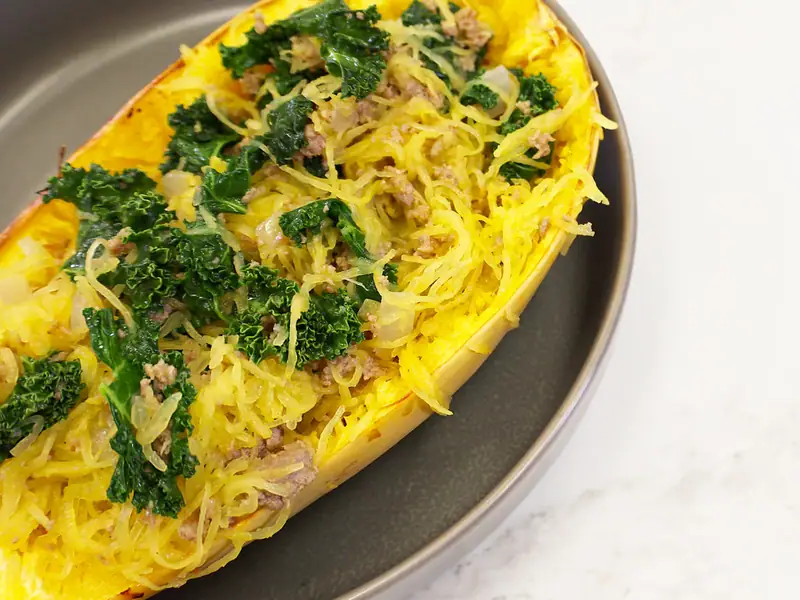
Photograph credit: Spaghetti Squash Boats by Alabama Extension · CC0 1.0 · Flickr
Make Ahead and Storage
Best eaten straight away. Cooked strands keep in the fridge for up to 3 days and can be reheated in a hot pan to drive off moisture. They freeze for up to 3 months, though they go softer.
Spaghetti Squash: The Method
Tap a step to highlight it, or turn on Cook Mode for large type and step-by-step focus.
-
Heat the oven to 200°C / 400°F (180°C / 355°F fan) and line a large baking tray with baking paper.
-
Cut the squash in half lengthways with a large, sharp knife. Scoop out the seeds and the stringy pulp with a spoon.
-
Brush the cut surfaces with 1 tablespoon of the oil and season with half the salt and pepper.
-
Place the squash cut side down on the tray and roast for 35 to 45 minutes, until the skin gives when pressed and a knife slides easily into the flesh.
-
Leave the squash to cool for 10 minutes, until you can handle it, then scrape the flesh with a fork to pull it into strands. Tip the strands onto kitchen paper for a minute to remove excess moisture.
-
Melt the butter with the remaining oil in a large frying pan over medium heat. Add the garlic and cook for 1 minute until fragrant but not browned.
-
Add the squash strands, the rest of the salt and pepper and the lemon juice and toss for 2 minutes until hot.
-
Take off the heat, stir in the Parmesan and parsley and serve at once.
Something wrong or unclear in this recipe? Report a problem with this recipe.
A Few Pointers
- Cut the squash across into 3 cm rings, not lengthways, if you want long strands, and roast the rings in a single layer for about 25 minutes. The strands run around the squash in circles, so cutting across keeps them whole.
- Roast it cut side down. The flesh steams in the trapped moisture and the edges brown, which gives more flavour than boiling.
- Blot the strands on kitchen paper before you toss them. Spaghetti squash holds a lot of water, and a wet base makes the sauce thin.
Some Background
Spaghetti squash looks like an ordinary yellow winter squash, but its flesh has a party trick. When the squash is cooked and scraped with a fork, the flesh separates into long, thin, golden strands that look like spaghetti, and it is often used as a lighter alternative to pasta, or just as an interesting vegetable side. The flavour is mild and slightly sweet and the texture is tender with a little bite, so it is a blank canvas for other flavours and it takes to garlic, butter and Parmesan very well. Roasting is the best way to cook it, since it concentrates the flavour and dries the surface, whereas boiling or microwaving can leave the strands waterlogged. A few things make a real difference. The squash is cut in half lengthways, but cutting it across in rings gives longer strands, because the strands run in circles around the middle of the squash instead of from end to end. Roasting it cut side down steams the flesh in its own moisture and browns the edges. The cooked squash is scraped while still warm, and then it is best drained briefly, or patted with kitchen paper, so that the dish is not watery. Toss it with garlic butter and cheese while it is hot, and eat it straight away.
Serving Ideas
Meatballs in tomato sauce · Grilled chicken · A green salad
Sides from the same cuisine on this site: Creamy Coleslaw, Boston Baked Beans, Air Fryer Mushrooms.
Common Substitutions & Variations
- An eighth of a teaspoon of garlic powder per clove is the stand-in usually given when you are out of fresh garlic; it will not brown the same way, and it burns easily, so add it with the liquid.
Spaghetti Squash Nutrition Facts
Per serving, an approximate calculation from the ingredient list. Treat it as a rough guide: where a line offers a choice of foods, only one of them is counted. How the figures are worked out.
Your notes on this recipe
Cooked this? Keep a note for next time
Compiled by Turab
Checked by script for timings, diet labels and nutrition arithmetic. How the recipes are checked. Found a mistake? Tell us.
First published ; last changed .
You Might Also Like
More American cooking and healthy ideas from Weekly Delight.
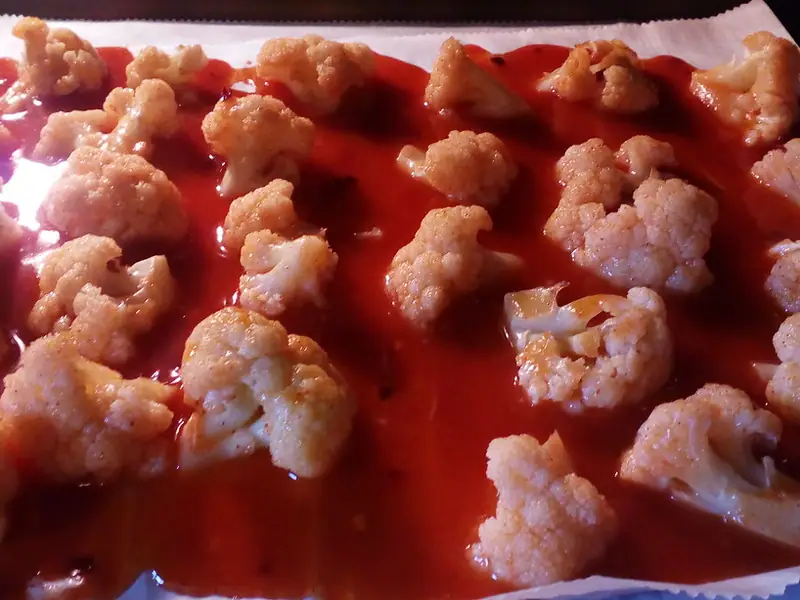
Cauliflower Wings
Cauliflower florets in a crisp panko coating, baked until golden and tossed in a hot, buttery buffalo sauce. A…
Cabbage Steaks
Thick slices of green cabbage brushed with garlic oil and roasted at 220C for 30 minutes until charred at the edges…
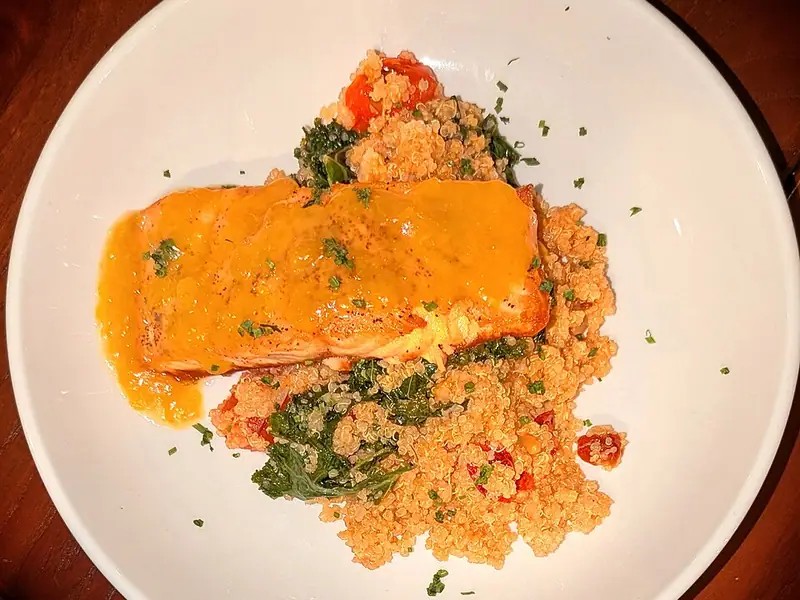
Baked Salmon and Quinoa Bowl
Salmon roasted just to the point of flaking, over quinoa with roasted broccoli and a dill-yoghurt sauce — a bowl…
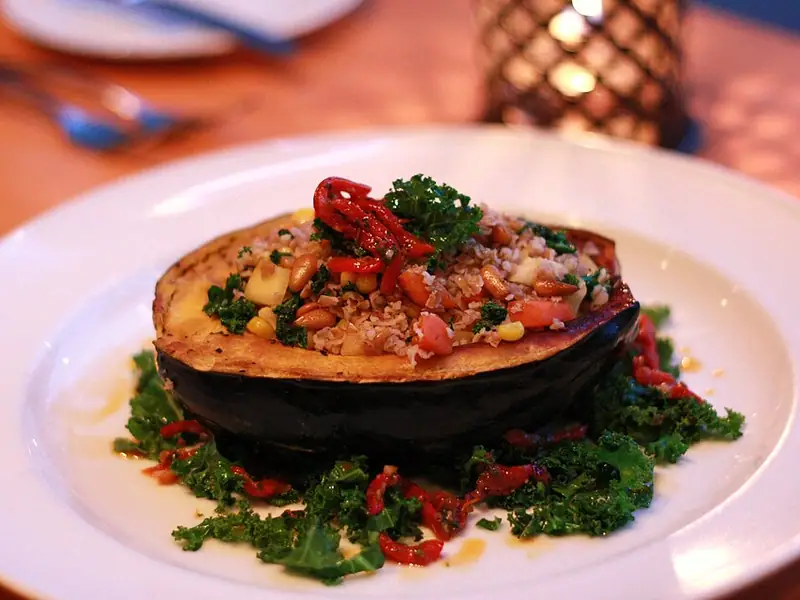
Stuffed Acorn Squash
Acorn squash halves roasted until soft and sweet, then piled with a filling of quinoa, cranberries, pecans, apple…
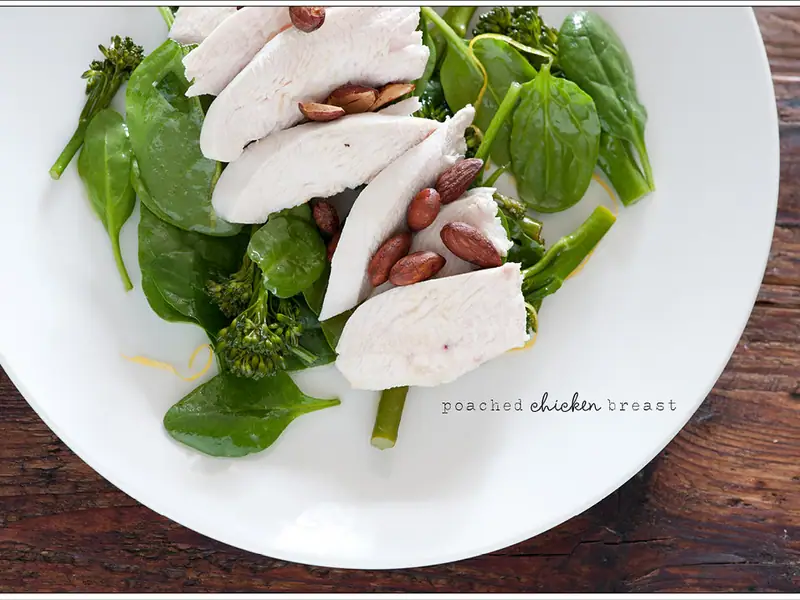
Poached Chicken Breast
Chicken breasts cooked gently in a flavoured poaching liquid until white, tender and juicy, for slicing or…
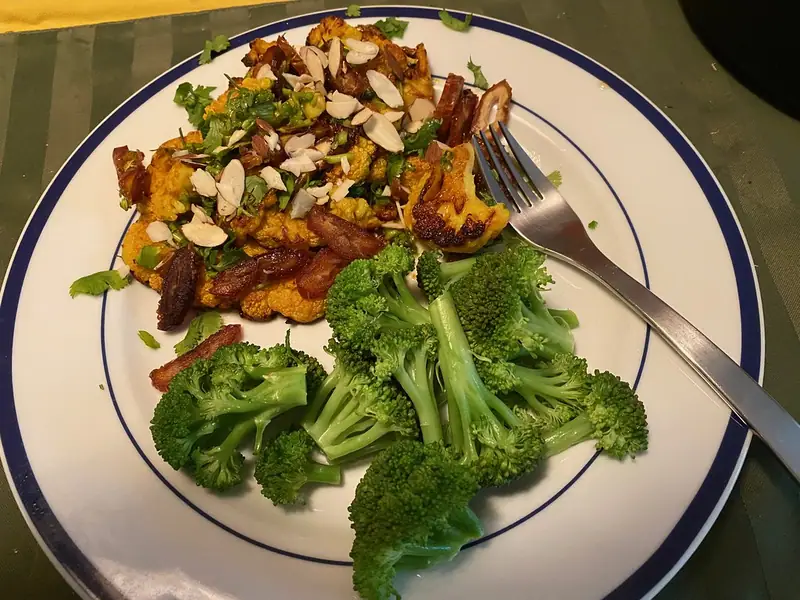
Roasted Cauliflower Steaks
Thick slabs cut through the core so they hold together, roasted hard until the cut faces caramelise, then dressed…